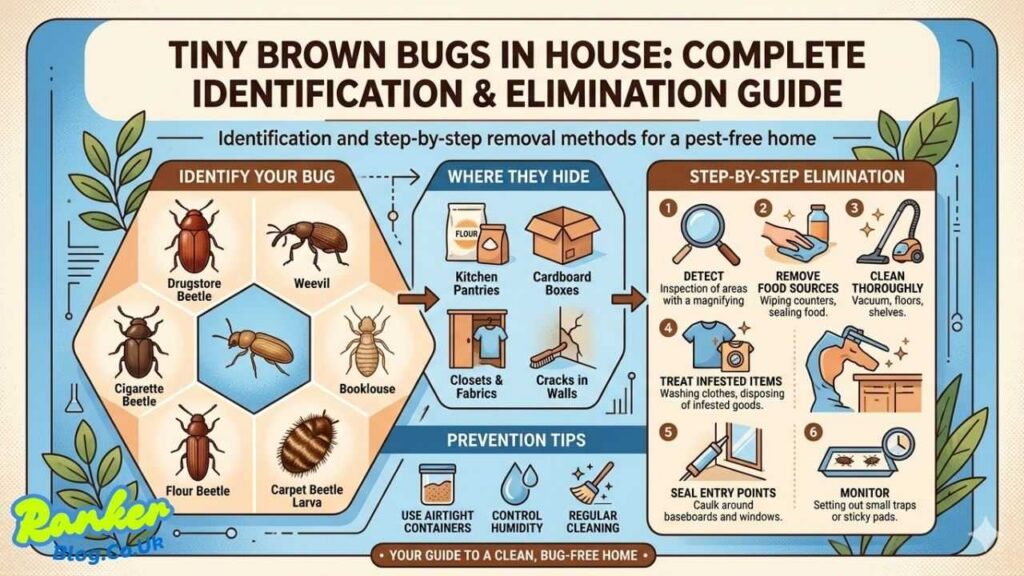
1. Common Types of Tiny Bugs Found in American Homes
Before you can solve a bug problem, you must know your enemy. Many tiny bugs look alike at first glance. But if you look closely, you can tell them apart. Here are the most common tiny bugs that people find inside their houses across the United States.
Carpet Beetles
Carpet beetles are small, oval-shaped bugs. They measure about one-eighth of an inch long. Their bodies have a pattern of black, white, and yellow or orange scales. They look a bit like tiny ladybugs but with duller colors. Adult carpet beetles fly toward windows and lights. You will often find them on windowsills. The real problem, however, is their larvae. The larvae are fuzzy and look like little caterpillars. They feed on natural fibers such as wool, silk, leather, and pet hair. They can damage your carpets, clothes, and furniture if left alone for too long.
Fungus Gnats
Fungus gnats are tiny black or gray flies. They are about one-sixteenth to one-eighth of an inch long. People often mistake them for fruit flies. The difference is that fungus gnats live in the soil of houseplants. They lay their eggs in damp potting mix. The larvae eat fungi and rotting plant matter in the soil. Adult gnats fly slowly and hover around your plants. They do not bite people or pets. They are mostly just annoying.
Springtails
Springtails are very small, usually less than one-sixteenth of an inch. They can be white, gray, or dark brown. Their name comes from a special forked tail on their underside. When they feel threatened, they snap this tail against the ground and jump into the air. This makes them look like tiny flecks of pepper that can hop. Springtails love moisture. You find them in bathrooms, basements, and kitchens. They gather near sinks, tubs, and leaky pipes. They eat mold and mildew. They do not bite or damage anything in your home.
Booklice
Booklice are tiny, soft-bodied insects. Most are smaller than one-sixteenth of an inch. They are pale white, gray, or light brown. They look like tiny specks moving across a surface. Booklice love damp, humid places. They eat mold and mildew. You might find them in old books, stacks of paper, cardboard boxes, or around windows with condensation. They do not bite and they do not carry diseases. But seeing them tells you that your home has too much moisture.
Fruit Flies
Fruit flies are small flies with red eyes. Their bodies are tan or brownish yellow. They measure about one-eighth of an inch long. You will see them flying around ripe fruit, vegetables, and anything that is fermenting. They also gather near drains, garbage cans, and recycling bins. Fruit flies breed very fast. A few can turn into hundreds in just a week. They do not bite, but they can carry bacteria from rotten food to fresh food.
The table below gives you a quick way to compare these common household pests.
| Bug Name | Size | Color | Where You Find It | Does It Bite? |
|---|---|---|---|---|
| Carpet Beetle | ⅛ inch | Black, white, yellow, orange | Windowsills, carpets, closets | No |
| Fungus Gnat | 1/16 – ⅛ inch | Black or gray | Near houseplants, damp soil | No |
| Springtail | Under 1/16 inch | White, gray, dark brown | Bathrooms, basements, sinks | No |
| Booklouse | Under 1/16 inch | Pale white, gray, light brown | Old books, paper, damp areas | No |
| Fruit Fly | ⅛ inch | Tan, brownish-yellow, red eyes | Kitchen, near fruit, drains | No |
2. Why Tiny Bugs Invade Your Living Space
Bugs do not enter your home for no reason. They are looking for something they need to live. Just like people, insects need food, water, and shelter. Your house offers all three. Understanding what attracts them is the first step to keeping them out.
Food Sources Inside the Home
Every tiny bug has a different diet. Some eat crumbs and food scraps left on counters and floors. Carpet beetle larvae eat natural fibers found in wool rugs and silk clothing. Booklice and springtails eat mold and mildew. Fungus gnat larvae eat fungi growing in wet plant soil. Fruit flies love overripe bananas, onions, and any food that has started to rot. Even a small spill behind the stove or a forgotten potato at the back of the pantry can feed bugs for weeks. Keeping your home clean removes their food supply.
Moisture and Humidity
Water is life. This is true for bugs too. Many tiny household pests need moisture to survive. Springtails and booklice will dry out and die if the air is too dry. They flock to bathrooms, laundry rooms, and basements where humidity is high. Leaky pipes under sinks create perfect bug habitats. Standing water in plant saucers attracts fungus gnats. Even condensation on windows in winter can support a small population of booklice. Fixing leaks and reducing humidity makes your home much less welcoming to these unwanted guests.
Easy Entry Points
Tiny bugs can squeeze through the smallest openings. A gap under a door, a torn window screen, or a crack in the foundation is like an open door to them. Some bugs, like carpet beetles, can fly in through open windows. Others hitch a ride on items you bring inside. Fungus gnats often come home with new houseplants. Booklice can arrive hidden in old books or cardboard boxes from the garage or attic. Springtails slip in through basement windows and crawl under doors. Sealing these entry points helps keep bugs outside where they belong.
3. Signs You Have a Tiny Bug Problem
Sometimes you see the bugs themselves. But other times, the signs are more subtle. Catching a problem early makes it much easier to solve. Here is what to watch for.
Visible Insects on Surfaces
The most obvious sign is seeing tiny bugs crawling or flying around your home. You might spot them on kitchen counters in the morning. You might see them gathered on windowsills during the day. Some bugs move fast. Others stay still unless disturbed. Pay attention to when and where you see them. This information helps identify the bug and locate the source of the problem. For example, if you only see bugs near your houseplants, fungus gnats are a likely suspect. If you see them near the bathroom sink, springtails might be the culprit.
Damage to Household Items
Some tiny bugs leave behind clues in the form of damage. Carpet beetle larvae chew holes in wool sweaters and rugs. They also eat through silk and leather. The damage often appears in odd shapes. You might also find shed skins from the larvae. These look like small, brown, fuzzy shells. Booklice do not cause major damage, but large numbers can ruin the glue in book bindings. If you notice unexplained holes in clothing or thinning patches on carpets, inspect the area closely for tiny bugs.
Unusual Debris and Droppings
Look for tiny specks of waste material. Carpet beetle larvae leave behind small, sand-like droppings near their feeding areas. Booklice and springtails produce very tiny waste that looks like fine dust. Fungus gnats do not leave much visible debris, but you might see tiny worm-like larvae in the top layer of your plant soil. Fruit flies leave small dark spots on walls and ceilings near where they gather. Finding these signs helps confirm that you have an active bug population. It also points you toward the spots where the bugs spend most of their time.
Now that you know what the common tiny bugs are, why they come inside, and how to spot the signs of a problem, you are ready for the next steps. In the sections that follow, you will learn how to prevent these pests from entering your home and how to get rid of them safely and effectively.
What You Need Before You Start
Getting rid of tiny bugs in your house starts with the right tools and a careful plan. Jumping straight to sprays without knowing what you are dealing with often makes the problem worse. Before you take any action, gather these basic items. They will help you inspect, identify, and treat the infestation in a safe and effective way.
- Bright flashlight: Most tiny bugs hide in dark corners, behind baseboards, under sinks, and inside cracks. A flashlight lets you inspect these shadowy areas without missing tiny movement.
- Magnifying glass or smartphone macro lens: Many household pests are smaller than a grain of rice. A 5x or 10x magnifier helps you see body shape, color, and leg count, which are key for correct identification.
- Clear sticky traps: Place these in areas where you suspect activity, such as along walls, near food, or under the sink. After 24 hours, the trapped bugs will give you a clear sample to study without them scattering.
- Sealable plastic bags and small containers: Use these to collect specimens, dead or alive. Sealing a bug prevents it from escaping and lets you show a pest control professional later if needed.
- White paper or index cards: Gently tap a bug onto a white surface. The contrast makes color, markings, and size much easier to see. You can also use it to test for bed bugs: a reddish smear when crushed indicates a recent blood meal.
- Notepad and pen: Record exactly where you saw the bugs (kitchen, bathroom, near windows, on houseplants), what time of day, and any patterns. This log becomes a valuable clue to the type of pest and its source.
- Protective gloves and a dust mask: Even tiny pests can trigger allergies. Gloves and a mask are important when cleaning droppings, shed skins, or using any pesticide, even natural ones.
Step-by-Step Process to Identify and Address Tiny Bugs
Once you have your tools, follow a clear process. Rushing to spray before you know what bug you are dealing with can put your family’s health at risk and waste money. This six-step method will guide you from discovery to control.
Step 1: Locate the Hot Spots
Walk through your home slowly with the flashlight. Pay attention to areas where you spend time, store food, or see moisture. Common hotspots include the kitchen pantry, under the sink, behind the toilet, near pet bowls, inside houseplant soil, and along window sills. Place sticky traps in at least three of these areas overnight. In the morning, check each trap.
Step 2: Collect Samples Safely
Use a small paintbrush or a piece of tape to lift a bug from the trap or a surface. Put it on the white paper. If it is alive and moving, gently trap it inside a clear container with a lid. Take several close-up photos using the magnifier or macro lens. Try to capture the bug’s legs, antennae, and any distinct markings. This visual record is essential for the next step.
Step 3: Identify the Bug Correctly
Compare your photos to trusted online guides. Focus on key features. Does the bug have six legs? Eight legs suggests a mite or tick and requires a different response. Does it have wings? Does it jump when approached? Is the body segmented or worm-like?
- Springtails: Tiny, whitish or gray, jump when disturbed, found in damp soil, bathtubs, or basements. Harmless but indicate a moisture problem.
- Booklice: Very small, pale brown, no wings, often found near moldy books, old wallpaper, or damp cereal boxes. They feed on mold, not people.
- Drain flies (moth flies): Fuzzy, moth-like, about ⅛ inch, rest on bathroom or kitchen walls near drains. They breed in the organic gunk inside pipes.
- Carpet beetles: Round, tiny, patterned with brown, white, and yellow scales. Larvae are hairy and worm-like. They damage wool, silk, and stored food.
- Fruit flies: Tan with red eyes, attracted to overripe fruit, recycling bins, and dirty drains. They reproduce quickly if food waste sits too long.
- Fungus gnats: Resemble tiny mosquitoes, hover around houseplants. Larvae live in overwatered soil and feed on root fungi.
If you cannot confidently identify the bug, email a clear photo to your local cooperative extension service. In the United States, every state has an extension office connected to a land-grant university. They offer free or low-cost identification help. For urgent or widespread infestations, contact a licensed pest management professional.
Step 4: Remove the Food, Water, and Shelter
Tiny bugs enter your home looking for three things: food, moisture, and a safe place to breed. The most effective and safest first response is to cut off these resources.
- Eliminate moisture: Fix leaky faucets, wipe down sinks and showers after use, and run a dehumidifier in damp basements. For drain flies, clean the drain pipe thoroughly with a stiff brush and boiling water, not just liquid drain cleaner.
- Store food in airtight containers: Transfer flour, cereal, rice, and pet food into glass or hard plastic containers with tight lids. Tiny bugs like flour beetles and weevils can chew through thin plastic bags and cardboard.
- Reduce clutter: Stacks of old newspapers, cardboard boxes, and dusty fabric items provide ideal hiding spots for silverfish, booklice, and carpet beetles. Recycle or seal in plastic bins what you must keep.
- Vacuum thoroughly: Use a vacuum with a HEPA filter to go over carpets, baseboards, cracks, and upholstery. Immediately dispose of the vacuum bag or canister contents in an outside trash bin.
Step 5: Apply the Right Treatment
Only after you have identified the pest and removed its food and water sources should you use any targeted treatment. Match the method to the bug.
- For springtails and booklice: Simply fix the dampness. Use a fan or dehumidifier to dry out the area. No chemical needed.
- For drain flies: Scrub the pipe interior with a long brush, then flush with boiling water and, if needed, a bacterial drain gel that eats organic buildup, not harsh bleach.
- For fungus gnats: Let houseplant soil dry completely between waterings. Place yellow sticky traps near the soil surface to catch adults. For severe cases, use a soil drench containing Bacillus thuringiensis israelensis (Bti), a natural soil bacterium safe for people and pets.
- For carpet beetles: Wash infested fabrics in hot water or dry clean. Vacuum meticulously, then apply food-grade diatomaceous earth in cracks and crevices. Use a duster to blow it lightly into voids; it dehydrates the insects.
- For fruit flies: Build a simple trap: pour a little apple cider vinegar into a jar, add a drop of dish soap, cover with plastic wrap poked with tiny holes. The flies enter and cannot escape. Then locate and dispose of the rotting food source.
Always read and follow the label exactly when using any pesticide, even natural ones. The label is the law. Keep children and pets away during and after application as directed.
Step 6: Monitor and Adjust
After cleaning and treatment, set fresh sticky traps in the same spots. Check them every two days. A decreasing number of bugs means your plan is working. If numbers stay the same or increase after one week, re-examine your identification. You might be missing a hidden food source or a different pest entirely. Never apply more pesticide than the label allows; that creates resistance and endangers your household.
Pro Tips to Prevent Future Infestations
Stopping tiny bugs before they settle in is far easier than fighting an established population. Build these habits into your routine.
- Inspect food packaging before buying. At the grocery store, check flour, grains, and dried fruit packages for tiny holes or webbing. Store new products in an isolated spot for a few days to monitor before adding to your pantry.
- Rotate your emergency supplies. Long-term food storage is a magnet for pantry pests. Use the “first in, first out” rule and check expiration dates monthly.
- Seal entry points. Use silicone caulk to seal cracks around windows, doors, pipe penetrations, and baseboards. This blocks not only tiny bugs but also the larger insects that hunt them.
- Manage indoor plants wisely. Do not overwater. Remove standing water from saucers. If bringing plants inside after summer, isolate them for two weeks to watch for hitchhiking pests.
- Clean drains weekly. Use a bacterial drain maintainer or a baking-soda-and-vinegar flush (followed by boiling water) to prevent organic film buildup where flies breed.
- Keep outdoor lighting in check. Many tiny bugs are attracted to light. Use yellow “bug lights” or LED bulbs with a warm color temperature on exterior fixtures near doors, and keep window screens in good repair.
Common Mistakes People Make
Avoiding these frequent errors will save you time, money, and stress.
- Mistake: Spraying insecticide before identifying the bug. A broad-spectrum pesticide can kill helpful predators while the real pest hides in a crack, reappearing later. It can also be dangerous to apply near food without knowing what you’re treating.
- Mistake: Using outdoor pesticides indoors. Products made for garden use can be highly toxic inside a closed home. Always use treatments labeled specifically for indoor residential use.
- Mistake: Ignoring the moisture source. Many tiny bugs, like springtails and booklice, do not respond to chemicals at all. If you don’t dry out the area, they keep coming back within days.
- Mistake: Assuming one treatment is enough. Insect eggs often survive the first application. Most treatments require a follow-up according to the product’s life-cycle window, usually 7 to 14 days later, to catch newly hatched nymphs or larvae.
- Mistake: Storing pantry goods in original packaging. Thin cardboard and paper bags are no barrier to determined flour beetles or Indianmeal moths. Switch to airtight containers immediately after opening.
- Mistake: Using too much pesticide or mixing products. More is not better. Overdosing creates a health hazard for your family and can speed up pesticide resistance in the bug population.
DIY Solutions vs. Professional Pest Control
Many tiny bug problems can be solved with thorough cleaning and simple home remedies. However, some situations call for professional help. The table below clarifies when a DIY approach is fine and when to call a licensed exterminator.
| Situation | DIY Approach | Professional Help |
|---|---|---|
| Small number of fruit flies around the kitchen | Vinegar trap, clean drains, dispose of overripe fruit. Problem solved in 3–5 days. | Rarely needed unless the drain interior is deeply fouled. |
| Occasional springtails in the bathroom | Dry the area, fix any plumbing leaks. Population vanishes. | Call only if drying fails, indicating a hidden wall leak that needs a plumber. |
| Continuous small brown beetles in the pantry | Empty pantry, discard infested items, vacuum, use airtight containers. Monitor for 2 weeks. | If reinfestation occurs after thorough cleaning, an expert can apply targeted insect growth regulators. |
| Hairy larvae on wool sweaters, shed skins in closet | Wash/dry clean all fabrics, vacuum intensely, apply diatomaceous earth in cracks. | For severe or widespread damage to expensive textiles, a pest professional can perform a heat treatment or apply residual dusts safely. |
| Unknown tiny bugs appearing in multiple rooms, biting family members | Set sticky traps and collect samples. But do not try to treat biting pests yourself. | Call immediately. Biting insects (fleas, bed bugs, some mites) require a trained eye, proper product selection, and often multiple visits. Misidentification here can lead to months of unnecessary suffering. |
| Tiny bugs in a new apartment or after recent travel | Inspect luggage, seal belongings in bags, wash everything on hot. | If you suspect bed bugs, contact a professional immediately. Early intervention is much less costly and disruptive. |
Real-Life Examples of Tiny Bug Problems
Practical stories can help you compare your own situation and apply the right solution.
Example 1: The Sink That Never Dried
The problem: A homeowner in Florida noticed dozens of tiny gray specks crawling on the bathroom tile every morning. She sprayed a household insecticide daily, but the specks returned the next day. What went wrong: She did not identify the bug. The specks were springtails, attracted by a slow, hidden leak under the vanity. The pesticide did nothing because the bugs lived in the damp void beneath the cabinet. The fix: A plumber fixed the leak, the area was dried with a fan for 48 hours, and the springtails disappeared completely without any chemical treatment. Lesson: always chase the moisture first.
Example 2: The Mystery Pantry Mites
The problem: A family in Ohio kept finding tiny white-brown specks crawling on the kitchen counter near the toaster. They assumed it was sugar ants and put out bait stations. The specks ignored the bait. What went wrong: A close-up photo revealed the specks were grain mites, not ants. The source was a forgotten bag of birdseed stored in the cabinet above the toaster. The mites had multiplied and were falling down through a gap. The fix: The birdseed was double-bagged and thrown outside. The entire cabinet was emptied, vacuumed, and wiped with warm soapy water. Within three days, the mites were gone. The family now keeps pet food and seeds in sturdy plastic bins with gasketed lids, and checks them monthly.
Example 3: The Houseplant Bonanza
The problem: An apartment in Chicago became suddenly filled with tiny, mosquito-like flies. The renter sprayed flying insect killer daily, but the flies kept emerging. What went wrong: The flies were fungus gnats breeding in the wet soil of three large potted plants. The spray only killed adults on contact but left larvae undamaged in the soil. The fix: The renter let the soil dry out completely, then watered with a Bti solution per label directions. Yellow sticky traps caught adult flies. Within two weeks, the gnats were eliminated. Now the renter always checks soil moisture with a finger before watering.
Further Reading and Trusted Resources
Building your own knowledge makes you less likely to panic and more likely to solve the problem the first time. Here are some reliable internal topics and external authority sources where you can learn more.
Internal Guides
- Interactive Bug Identification Tool – Compare your photo side-by-side with our image library.
- Seasonal Pest Prevention Checklist – A room-by-room walkthrough for spring and fall.
- Homemade Natural Pest Control Sprays – Recipes and safe application instructions.
- <“`html
Final Summary: Regaining a Bug-Free Home
Dealing with tiny bugs in your house can feel overwhelming, but most infestations are manageable with the right approach. Whether you’re facing springtails in the bathroom, fungus gnats around houseplants, or grain beetles in the pantry, the key steps remain the same: identify the pest, remove its food and water sources, seal entry points, and use targeted treatments when necessary. Small insects indoors often signal a moisture problem, a forgotten food spill, or a tiny crack that went unnoticed. By addressing these root causes, you not only eliminate the current bugs but also prevent future invasions.
Remember that not every tiny bug is a threat. Many species, like clover mites or booklice, are nuisance pests that bite neither people nor structures. However, others—such as carpet beetles—can damage fabrics, and some, like bed bugs, require professional help. The moment you spot an unfamiliar insect, try to capture a clear photo so you can compare it with reliable online guides or show it to a local extension expert. Proper identification is half the battle.
Consistency is crucial. After cleaning and applying natural repellents or insecticides, keep monitoring hotspots with sticky traps. Check underneath sinks, around windows, and along baseboards weekly. If you live in an apartment or condo, communicate with building management because shared walls can spread an infestation quickly. A persistent problem might call for an integrated pest management plan that combines sanitation, exclusion, and low-toxicity products.
Key Takeaways for a Bug-Free Living Space
- Inspect regularly: Look for tiny bugs in house areas that are damp, dark, or near food. Early detection stops major outbreaks.
- Reduce moisture: Fix leaks, use dehumidifiers, and ventilate bathrooms. Moisture attracts springtails, silverfish, and mold-feeding insects.
- Seal gaps: Caulk cracks around windows, doors, pipes, and baseboards. This blocks ants, termites, and many other small insects indoors.
- Clean thoroughly: Sweep up crumbs, store dry goods in airtight containers, and take out trash daily. A crumb-free kitchen is your best defense against pantry pests.
- Use safe treatments: Start with non-toxic methods like diatomaceous earth or a vinegar spray before moving to chemical solutions. Always read and follow label directions.
Conclusion: Take Control of Tiny Pests with Confidence
Tiny bugs in the house are a common household nuisance, but you now have the knowledge to identify, treat, and prevent them effectively. The most important step is not to panic—small insects indoors rarely pose immediate danger, and systematic action yields faster results than haphazard spraying. Focus on cleaning, drying, and sealing. If the bugs keep returning despite your efforts, it may be time to involve a licensed pest control professional who can safely apply stronger treatments and conduct a thorough inspection for hidden nests.
You deserve a comfortable, pest-free home. Follow the advice in this guide, stay observant, and you’ll be able to enjoy every corner of your house without unwelcome tiny visitors.
Still Not Sure Which Bug Is Invading Your Space?
Send us a clear photo or description using our free online bug identifier tool, and we’ll help you pinpoint the species and recommend the safest, most effective solution. Or, find a trusted pest control specialist in your area for an in-person assessment. Your path to a bite-free, bug-free home starts with a single click.
Frequently Asked Questions About Tiny Bugs in the House
- What are the most common tiny bugs found in houses?
- Common tiny bugs in house settings include springtails, fungus gnats, carpet beetles, booklice, clover mites, drain flies, and several types of ants. Identification depends on where you find them—bathrooms and kitchens with high moisture often harbor springtails and drain flies, while dry pantries may attract grain beetles or weevils. Carpet beetle larvae are fuzzy and slow-moving, and clover mites are tiny red dots often seen on sunny windowsills.
- How do I get rid of small insects indoors naturally?
- Natural control starts with sanitation and exclusion. Vacuum thoroughly, wipe surfaces with vinegar and water, and fix leaks to dry out damp areas. Sticky traps capture adult flies and crawling bugs without chemicals. Diatomaceous earth (food grade) sprinkled along baseboards kills insects by damaging their exoskeleton. Essential oil sprays—peppermint, tea tree, or eucalyptus—can repel many tiny bugs when applied to entry points, but always test on a small area first.
- Are tiny bugs in the house harmful?
- Most tiny bugs indoors are nuisance pests only. They don’t bite humans or spread disease. However, a few species can cause allergic reactions (carpet beetle hairs), damage clothing, or contaminate food. Bed bugs, though not always tiny, require immediate professional treatment. If you experience unexplained skin irritation, consider the possibility of fleas, mites, or bed bugs and consult a doctor for identification of bite marks.
- Why do I have tiny bugs in my house suddenly?
- Sudden appearances often tie to a change in environment. Heavy rain drives soil-dwelling insects indoors; an overwatered plant can trigger a fungus gnat explosion; bringing in cut flowers or used furniture may introduce hidden hitchhikers. Seasonal shifts also matter—clover mites invade homes in early fall seeking warmth, and pantry moths become active when temperatures rise. Inspect any new items or recently disturbed storage boxes to pinpoint the source quickly.
- How can I prevent tiny bugs from entering my home?
- Prevention focuses on blocking entry and eliminating attractants. Install door sweeps, repair window screens, and caulk gaps around utility pipes. Keep outdoor lighting away from doors, or use yellow bug lights, because many small insects are drawn to standard white bulbs. Indoors, reduce clutter, store food in sealed glass or plastic containers, and empty recycling bins regularly. Routinely clean gutters and downspouts to direct water away from your foundation, which also stops moisture-loving bugs.
- What are tiny black bugs in the house?
- Tiny black bugs could be several species: carpet beetles (round, hard-shelled, sometimes found on windowsills), black ants following a scent trail, minute pirate bugs (often an outdoor species that wanders inside). In damp areas, you may see springtails that appear dark gray to black and jump when disturbed. If the bugs are clustered near food packages, check for weevils or grain beetles. Capture one on clear tape to examine its shape—carpet beetles are oval, while ants have a pinched waist.
- What are tiny brown bugs in the kitchen?
- Tiny brown bugs in the kitchen are frequently pantry pests such as flour beetles, cigarette beetles, or drugstore beetles. They infest flour, cereal, spices, and even pet food. You might also spot drain flies, which are fuzzy and moth-like, resting near the sink. Another possibility: booklice, which are soft-bodied and pale brown, often found in old cookbooks or cardboard boxes if humidity is high. Thoroughly inspect all dry goods, discard infested items, and wipe cabinets with soapy water.