Tiny House Insurance Options: What You Need to Know
Finding insurance for a tiny house is not as straightforward as insuring a traditional home. Because tiny houses vary significantly in how they are built, certified, and used, the insurance needed to cover one varies too, and your options depend on your particular circumstances. Whether your tiny house sits on a permanent foundation or rolls on wheels, understanding the available policy types is essential for protecting your investment. This guide walks through the main insurance options, what they cover, their limitations, and how to choose the right policy for your situation.
Understanding Your Tiny House Classification
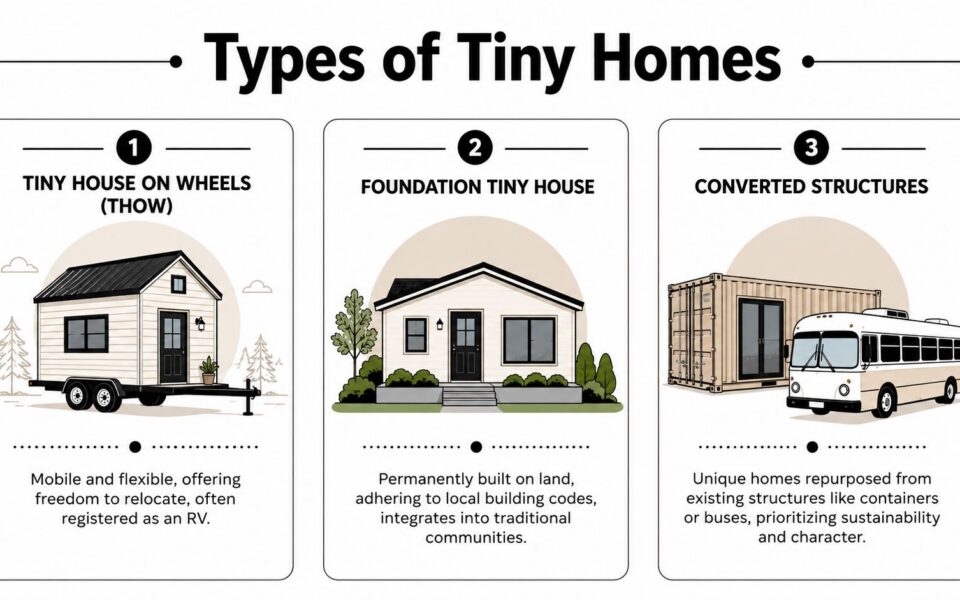
The type of insurance you need depends heavily on how your tiny house is built, where it sits, and whether it is mobile or stationary. Most tiny homes are between 100 and 400 square feet, though there are no official size limits or specifications for insurance purposes; for comparison, most single-family dwellings built in 2019 were 2,301 square feet according to the U.S. Census Bureau. Construction method and certification play significant roles in determining insurability. [4]
The most crucial aspect of finding the right provider is knowing how your tiny house is classified, because that classification dictates the type of policy you can get. You need to determine whether your tiny home meets the standards for a manufactured home, an RV, an accessory dwelling unit, a specialty structure, or something else. Once you have verified the type of structure, you can research which providers offer that particular insurance. [6]
Homeowners Insurance for Certified Stationary Tiny Houses
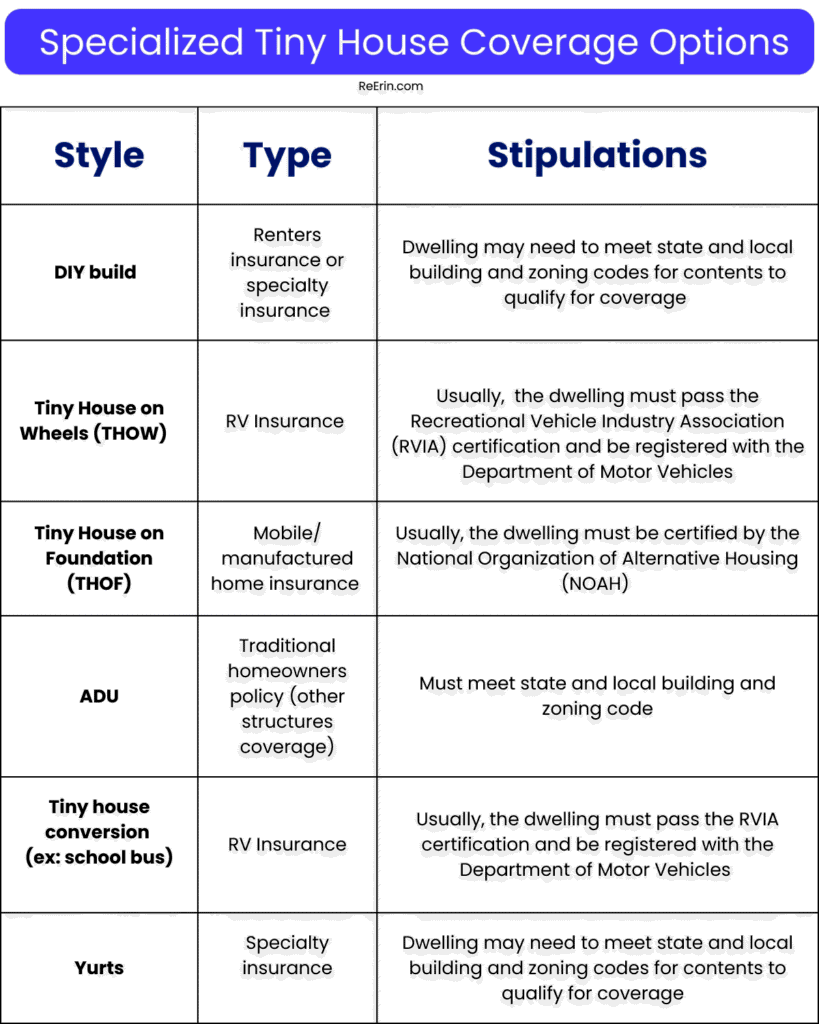
If your tiny house is permanently affixed to a foundation and meets local building codes, a regular homeowners insurance policy may be an option. If your home meets local building codes and displays a construction seal or plate, you can purchase a regular homeowners insurance policy for your tiny home, with coverage similar to other dwellings: Coverage A for the structure, personal property, liability, and additional living expense. Premiums are influenced by location hazards and broader market conditions. For foundation builds, permits, inspections, and documented compliance with the local residential code improve eligibility for homeowners coverage, and rentals may fit a DP-3 form. [2]
That said, standard homeowners insurance—most commonly HO-3 and HO-5 policies—is often not an option for tiny homes, particularly if yours is on wheels. These policies are generally designed for homes permanently affixed to a foundation; mobile tiny houses on wheels typically do not qualify. [2][6]
RV Insurance for Mobile Tiny Houses
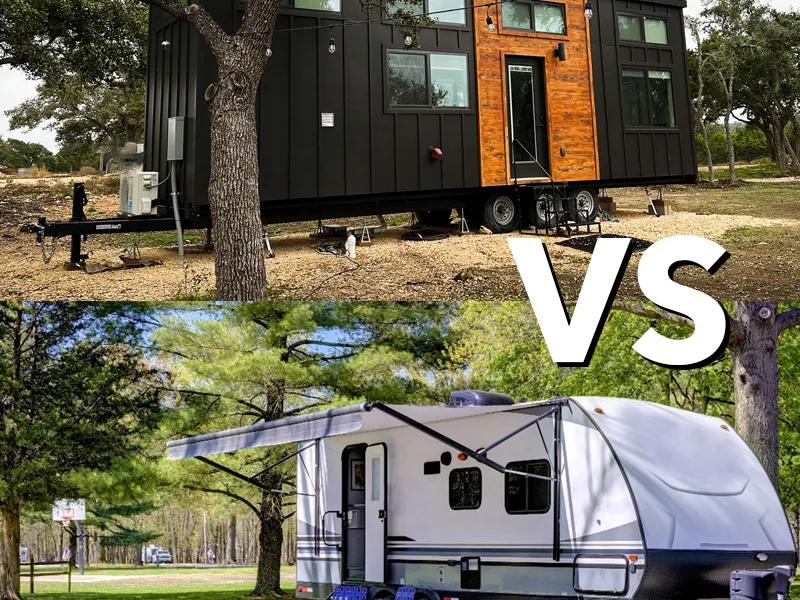
For tiny houses built on wheels that meet recognized RV standards, RV insurance offers a practical path to coverage. In practice, a movable tiny home is usually insured on a travel-trailer or PMRV policy when it meets recognized RV standards. You can add a full-timer's endorsement if it is your primary residence. Your auto policy typically provides third-party liability while towing, while the RV policy covers the trailer's physical damage and liability when parked. It is important to clarify settlement terms (agreed value vs. actual cash value), personal effects limits, attached items such as decks or solar, trip and transport coverage, and roadside assistance or towing. For movable units, accepted labels include RVIA or equivalent third-party certifications to NFPA 1192 or ANSI A119.5. [2]
Mobile Home and Manufactured Home Insurance for Stationary Tiny Houses
If your tiny house is permanently stationed in one location, a mobile and manufactured home policy may be your strongest coverage option. If your tiny house was built by a NOAH-certified builder and you only move it a couple of times a year, your easiest insurance option would probably be a mobile and manufactured home policy. Tiny houses on foundations are generally easier to insure since they are not movable, and this type of coverage would work like a typical home policy. [1][5]
Dwelling Fire Policies for Non-Primary Residences
If your tiny home is not your primary residence but is built on a permanent foundation, a dwelling fire insurance policy may be another potential option. This type of insurance is commonly used for a dwelling that the owner does not occupy for most of the year, such as seasonal, vacation, secondary, or vacant homes. Dwelling fire policies mainly focus on protecting the structure itself, so their personal property coverage tends to be limited, and liability insurance is typically not included. [6]
Specialized Tiny House Policies
Dedicated tiny house insurance bridges the gap between RV coverage and traditional homeowners policies. You may be able to find a specialty insurer with dedicated tiny house insurance, such as Foremost Insurance or Strategic Insurance. The specific coverages and eligibility requirements depend on the carrier and policy, but you typically get protection for the tiny house, its contents, and personal liability. Specialty insurers are often the best route for tiny houses that are DIY or unconventional, especially if they do not comply with RV or manufactured home standards. Typical coverage under these programs includes the structure against risks like fire, theft, or vandalism; personal belongings inside the home; liability protection if someone is injured on your property; and additional living expenses if your home becomes uninhabitable due to a covered event. [2][3][6]
Additional Coverage Options
If your tiny home is unlivable due to a covered event, additional living expenses coverage helps pay for temporary housing. If you plan on moving your tiny home, you may need to add a transit endorsement to cover your home and personal belongings while on the road; some specialty programs add trip coverage and tiny-home-specific options. If you are building or transporting a unit prior to occupancy, consider builder's risk or course-of-construction coverage. [2]
Insurance Providers to Contact
Several companies have experience insuring tiny houses. Foremost writes park model and tiny home policies and is considered the best company for stationary tiny houses, but the house must be certified by NOAH or RVIA. American Modern offers specific policies for tiny homes, including those on wheels, and is one of the first insurance companies to specialize in mobile home insurance. It also offers seasonal and vacant home insurance options if you do not live in your tiny house full time, and coverage is available in all 50 states and Washington, D.C., though you cannot get a quote online and must contact an agent by phone. State Farm is recommended for tiny house rentals. Progressive covers tiny houses on foundations; one policyholder reported an annual premium of about $1,000 for a tiny house on a foundation, declaring $90,000 for the structure and $20,000 worth of goods. Geico offers house-on-wheels and RV insurance policies, holds an A++ financial strength rating, and is available in 50 states. Liberty Mutual is recommended for landlord insurance on tiny rental properties; its landlord policy includes dwelling, premises liability, wind and hail insurance, as well as fair value protection that covers lost rent for the period your tiny home cannot be rented due to a covered claim. American Family is considered the best option for tiny houses on wheels, with a rating of 4.4/5 stars and availability in 19 states. Prices and availability vary by state and build type, so always get multiple quotes. [1][3][5]
Cost Considerations
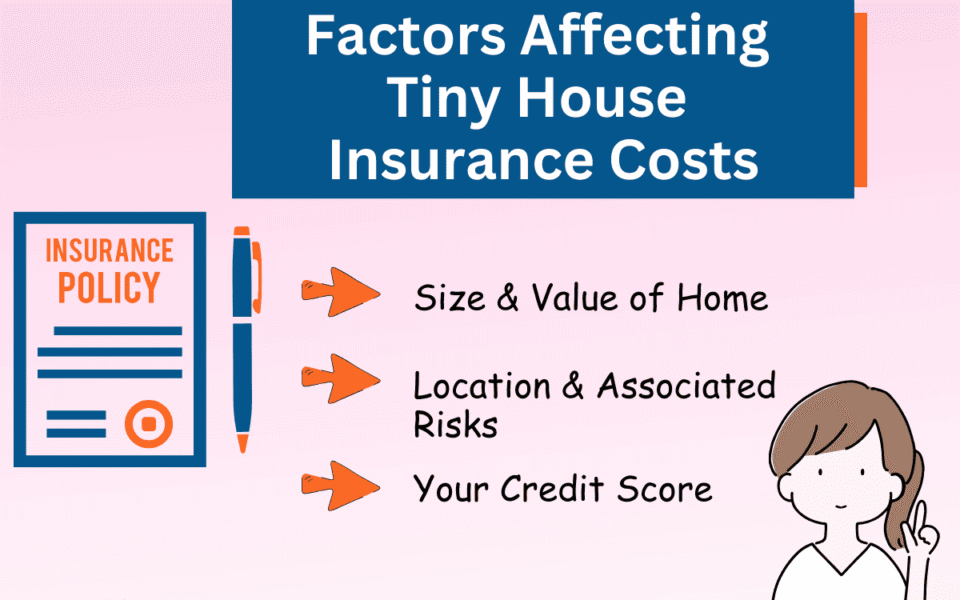
Insurance costs vary significantly based on your tiny house type and location. Most tiny homes are between 100 and 400 square feet, which affects premium calculations, and premiums are influenced by location hazards and broader market conditions. One policyholder reported an annual premium of about $1,000 for a tiny house on a foundation with Progressive, declaring $90,000 for the structure and $20,000 worth of goods. On the savings side, you can bundle a landlord and home or auto insurance policy and get a lower premium, provided you are claims-free for at least five years and get a quote before your old policy expires. If you store sports equipment in your tiny vacation home, you can upgrade your temporary living coverage with optional policies for sports equipment. [1][2][3][4]
Practical Recommendations
1. Start with your classification. Determine whether your tiny house is on a foundation, on wheels, RVIA or NOAH certified, or a DIY build. Knowing how your tiny house is classified is the most crucial aspect of finding the right provider, because it dictates the type of policy you can get. [5][6]
2. Get multiple quotes. Contact several providers, including those that specialize in tiny houses. Prices and availability vary by state and build type. [1]
3. Consider optional coverages. If you store sports equipment in your tiny vacation home, consider upgrading your temporary living coverage with optional policies. [3]
4. Check certification requirements. Some insurers like Foremost will only insure your tiny house if it is certified by NOAH or RVIA. For movable units, accepted labels include RVIA or equivalent third-party certifications to NFPA 1192 or ANSI A119.5. [2][5]
5. For DIY builds, seek specialty insurers. Specialty insurers are often the best route for tiny houses that are DIY or unconventional, especially if they do not comply with RV or manufactured home standards. [6]
Sources
1. The Ultimate Guide To Finding Tiny House Insurance — https://www.tiffanythetinyhome.com/blog/2017/9/5/finding-tiny-home-insurance 2. The Tiny House Movement and Insurance: Everything You Need to Know — https://www.reviews.com/insurance/homeowners/tiny-house-movement-insurance 3. 6 Best Tiny House Insurance Companies for 2023 — https://www.tinysociety.co/articles/tiny-house-insurance-companies 4. Mobile Home, RV & Tiny Home Insurance 101 — https://blog.winter-dent.com/insight/mobile-home-rv-tiny-home-insurance-101 5. Best Tiny House Insurance (2024) — https://www.policygenius.com/homeowners-insurance/tiny-house-insurance 6. How To Get Tiny House Insurance — https://www.usnews.com/insurance/homeowners-insurance/how-to-get-tiny-house-insurance