
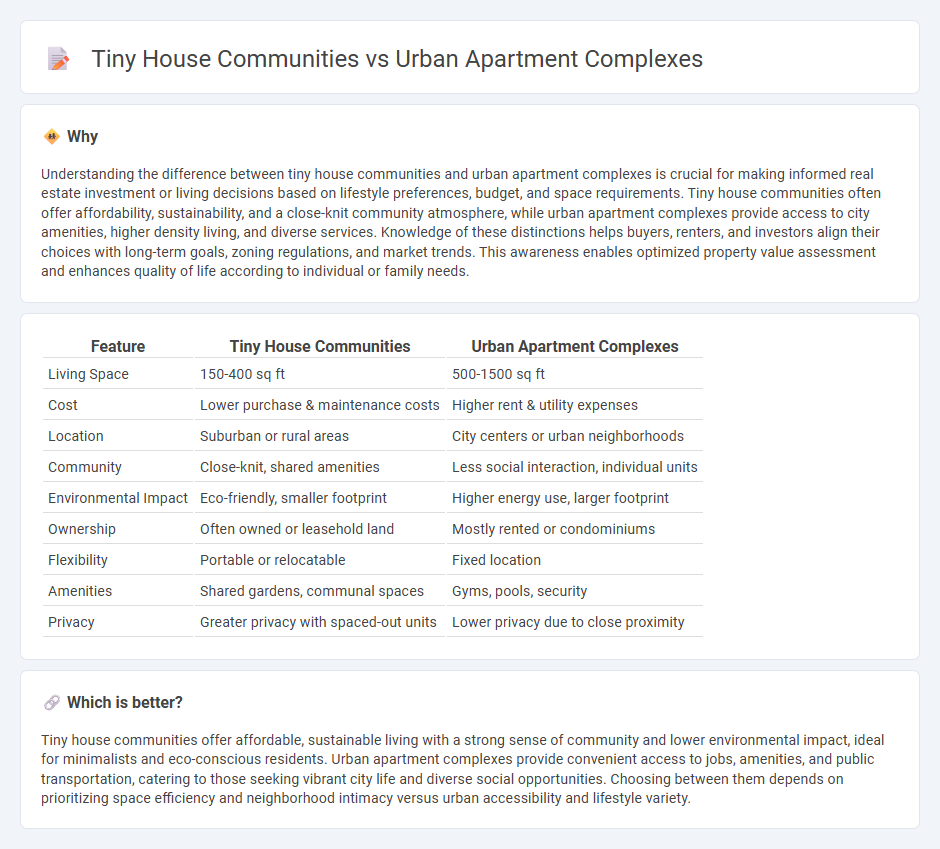
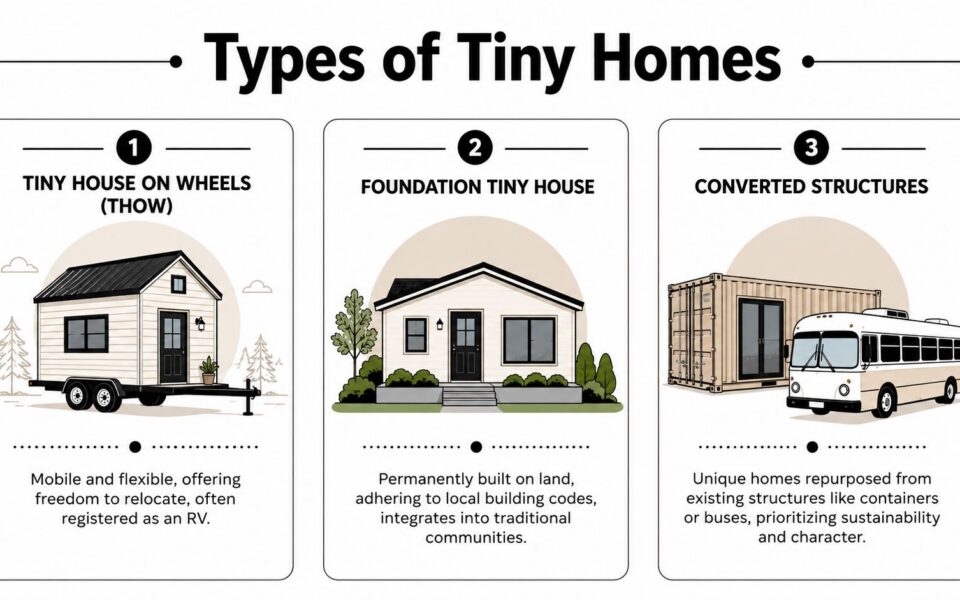
Tiny House vs Apartment Living: Which Is Better for Downsizing or Affordability? Deciding between a tiny house and an apartment is a major lifestyle choice, especially when your goals are downsizing or cutting costs. Both options offer a smaller footprint than a traditional single-family home, but they differ dramatically in ownership structure, legal hurdles, monthly expenses, and day-to-day living. This comparison breaks down the key factors for United States readers based on available research, so you can decide which path fits your situation. ## What Counts as a Tiny House vs an Apartment? Before comparing costs and lifestyle, it helps to understand the basic definitions. Tiny houses are standalone residential structures typically under 400 square feet, as defined by Appendix Q to the 2018 International Residential Code. The average tiny home size is 225 square feet, making it 8 times smaller than a typical house. Tiny houses come in various forms, ranging from mobile homes on wheels to small, permanent structures on a foundation. They can be built on a foundation or on a trailer chassis as a movable dwelling. [1][2][3]
Apartments are rental units within multi-family buildings that share structural walls, utility systems, and communal amenities with neighboring residents under a central property management company. Standard apartments average 700 to 1,000 square feet, though studio apartments may be smaller [1].
Cost Comparison: Upfront and Monthly
Purchase Price and Rent
Tiny houses are generally less expensive to build or buy than a standard home. The average tiny house cost was 87% cheaper than a traditional home. Professional tiny-built homes often range from $40,000 to $200,000. Per square foot, however, tiny homes are 62% more expensive than typical houses. As of August 2021, there were over 1.4 million homes considered "tiny" in the United States. Tiny homes are cheapest in North Dakota and most expensive in Hawaii [3]. Apartments require no construction cost, but you need first month's rent, a security deposit (typically one month's rent), and possibly application fees. Rental prices vary enormously by market, but the key difference is that apartment rent is a recurring monthly expense with no equity building.
Monthly Expenses
Utilities are typically lower in tiny houses because smaller spaces require less energy to heat and cool. Many tiny houses incorporate sustainable design features such as solar panels, composting toilets, and rainwater collection systems. Off-grid tiny house living requires occupants to independently generate power, manage freshwater tanks, and process waste without municipal utility connections. Tiny homeowners rely on solar arrays, propane tanks, composting toilets, and rainwater harvesting systems. In contrast, apartment tenants receive continuous water, sewage, and electric services managed entirely through utility accounts and building landlords. [5][1]
Tiny house living offers significant financial benefits including lower initial costs ($30,000–$75,000 vs. $300,000+ for conventional homes), reduced utility costs (many report monthly utilities under $50), decreased maintenance expenses, and lower property taxes. According to research, many tiny house owners report being able to live with reduced or no mortgage, allowing for greater savings, career flexibility, and potential early retirement [4].
Legal and Zoning Challenges
This is where tiny houses face their biggest hurdle. Since 2007, "tiny homes" have become increasingly popular in the United States, but legal recognition varies by jurisdiction. A local government can permit permanent occupancy of "tiny homes" by amending its zoning code to specifically permit use of land for tiny homes as a primary or secondary detached dwelling unit in existing residential districts. Tiny houses face unique challenges with parking and zoning regulations that vary significantly by location. Most municipalities require tiny homes to comply with local building codes, foundation requirements, and minimum square footage rules. You need to research specific zoning laws, as some areas restrict tiny houses to RV parks while others allow them in backyards or designated tiny house communities. Building permits, utility connections, and land-use restrictions can add complexity to establishing a permanent tiny house location. Some states make it easier to go tiny than others. Architect Magazine conducted a study on the states that make it the easiest to go tiny, studying resources, ordinances, and builders in all 50 states. They awarded points based on tiny home communities, RV parks accepting tiny homes, permitting/zoning opportunities, tiny house builders, tiny house architects, and towns specifically welcoming them. The top-scoring states were: California (32 points), Oregon (24), Texas (18), North Carolina (17), and Florida (16). If you're considering a tiny house, you must research your local zoning and building codes before purchasing land or a structure. Some areas require minimum square footage for dwellings, which would disqualify a tiny house. Others allow tiny houses only as accessory dwelling units (ADUs) on properties with an existing primary home. [2][1][3]
Apartments face far fewer legal hurdles—they are already zoned and permitted in most urban and suburban areas. You simply need to qualify as a tenant.
Lifestyle and Space Considerations
Privacy and Separation
Tiny house living offers autonomy in designing your daily routines and social interactions. In a tiny house village, each unit is separately insulated, with houses spaced apart. Tiny houses open to the outside, not into enclosed corridors, which improves air circulation. In an apartment building, you share walls, floors, and ceilings with neighbors. Noise transfer, shared ventilation systems, and common hallways are standard. If privacy and separation are priorities, a tiny house offers more control.
Space and Storage [1]
Both options require downsizing. A tiny house at 400 square feet or less forces you to evaluate every possession. The limited space encourages more intentional decisions about possessions and consumption. Tiny houses maximize vertical space through multi-functional furniture and built-in storage solutions. [1][5]
Apartments typically offer more storage options—closets, cabinets, and sometimes a basement or storage unit. However, studio apartments can feel just as tight as a tiny house, especially if the layout is inefficient. Common challenges documented in tiny house research include limited storage space (requiring creative solutions and regular decluttering), hosting limitations (needing creative use of outdoor spaces for entertaining), and privacy considerations (establishing personal space routines for couples and families).
Community and Social Factors [1][4]
The choice between tiny house and apartment living impacts your daily social interactions and lifestyle patterns. Some people like the idea of being part of a community as opposed to living off the grid. More than 3 in 5 (65%) Americans would consider living in a tiny home community, and 12% already have tiny home communities near where they currently live. However, tiny house communities remain relatively rare. [3][6]
Apartments are typically in denser areas with easier access to public transit, grocery stores, entertainment, and social opportunities. If walkability and urban amenities matter, an apartment likely wins. ## Which Is Better for Downsizing? Downsizing is about reducing square footage and possessions. Both options achieve that, but the process differs:
- Tiny house: You own the structure. You can customize storage, build multi-functional furniture, and design every inch. However, you must handle construction, permits, and land acquisition. Research indicates that tiny house owners experience numerous lifestyle benefits including simplified living (less time spent on cleaning and maintenance), increased financial freedom (ability to work less or pursue passion projects), greater mobility (especially for homes on wheels), and a focus on experiences over possessions. The downsizing process encourages prioritizing essential items and can lead to reduced stress from clutter and maintenance demands. – Apartment: You rent the space. You cannot modify walls or add built-ins, but you can move out if the space doesn't work. Downsizing to an apartment is often faster and less stressful than building or buying a tiny house. ## Which Is Better for Affordability? Tiny house living offers significant financial benefits including lower initial costs ($30,000–$75,000 vs. $300,000+ for conventional homes), reduced utility costs, decreased maintenance expenses, and lower property taxes. According to research, many tiny house owners report being able to live with reduced or no mortgage, allowing for greater savings, career flexibility, and potential early retirement. Apartments require no down payment or construction costs, but rent can increase yearly. Over the long term, a tiny house you own outright may be cheaper than renting an apartment for decades. In the short term, an apartment is almost often easier to afford upfront. Tiny houses offer freedom, mobility, and potential cost savings, while apartments provide convenience, community, and established amenities.
Practical Limitations to Consider [4][1]
Tiny House Limitations
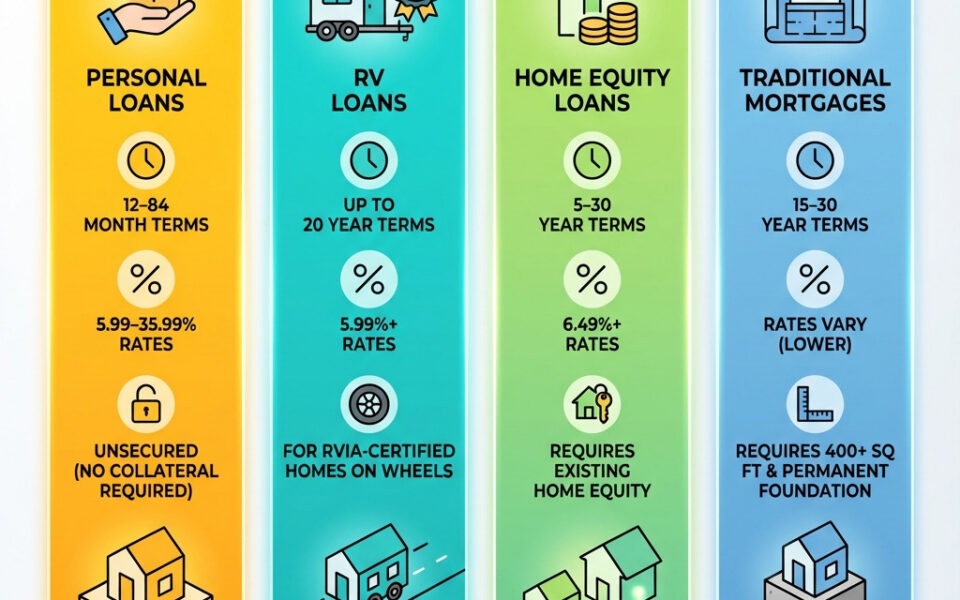
- Zoning and legality: Not legal everywhere. Verify your local codes before committing. – Financing: Tiny houses are difficult to finance with a traditional mortgage. Many buyers pay cash or use personal loans. – Resale: The resale market for tiny houses is thin. You may struggle to sell if your circumstances change. – Land: You need a place to put it. Renting land adds monthly costs; buying land adds upfront costs. [1][2]
Apartment Limitations
- Rent increases: No cap on annual increases in most markets. – No equity: You build no wealth through rent payments. – Rules and restrictions: Pet policies, guest limits, noise rules, and decoration restrictions. – Uncertain tenure: Landlords can choose not to renew your lease.
Recommendations by Reader Profile
Choose a tiny house if:
- You have or can acquire land in a tiny-house-friendly jurisdiction
- You want to own your home and build equity
- You value privacy and separation from neighbors
- You're handy or willing to learn maintenance skills
- You can pay cash or secure alternative financing
Choose an apartment if:
- You need flexibility to move for work or family
- You want predictable monthly costs without surprise repairs
- You prefer urban walkability and amenities
- You don't have savings for a down payment on land and a structure
- You want to test compact living before committing to ownership
Final Verdict
Neither option is universally "better." The right choice depends on your personal values, lifestyle needs, and financial goals. Tiny houses offer freedom, mobility, and potential cost savings, while apartments provide convenience, community, and established amenities. Based on the research presented, tiny house living offers significant financial, environmental, and lifestyle benefits. However, common challenges include zoning restrictions (requiring thorough research of local laws), limited storage space, and privacy considerations. Before deciding, verify current prices and availability from local builders, real estate listings, and rental platforms. Check your city or county zoning department about tiny house legality. Talk to current tiny house owners and apartment renters in your target area. The more local information you gather, the better your decision will be. — [1][4]
Sources
1. Tiny House vs Apartment: 11 Pros & Cons to Choose 2. Tiny Homes and Compact Living Spaces 3. Tiny House Living: A United States Revolution 4. Research-Backed Benefits of Tiny House Living in 2026 | Facts & Statistics 5. Tiny House Movement In the United States 6. Tiny Homes in America: Latest Data on Alternative Housing

This Post Has 28 Comments