Navigating Tiny House Zoning Laws and Regulations by State
If you're dreaming of a simpler life in a tiny house, understanding zoning laws is your most important first step. While the tiny house movement has gained significant momentum across the United States, regulations remain highly localized. What works in one county may be completely prohibited in a neighboring jurisdiction. This guide breaks down the legal landscape state by state, helping you understand where tiny houses are most welcome and what you need to verify before making any commitments.
Understanding the Big Picture: Why Zoning Matters
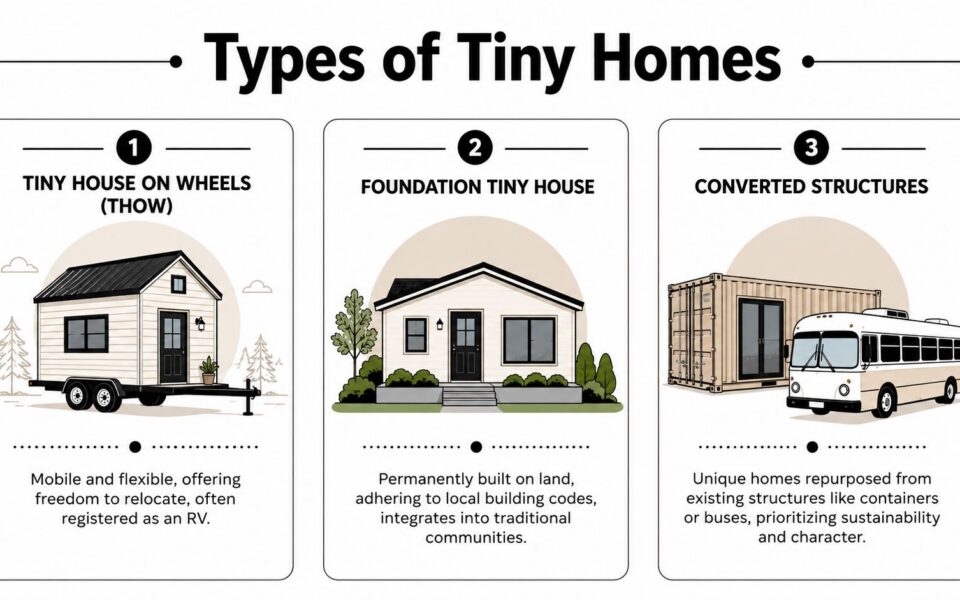
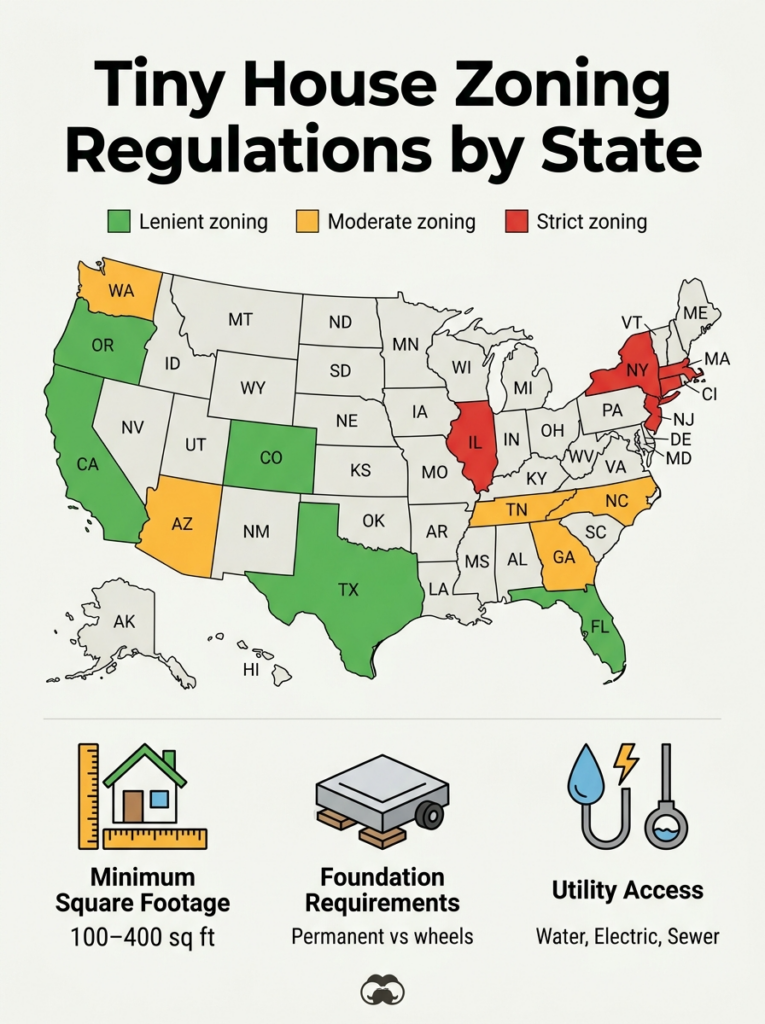
Zoning laws determine where you can place a tiny house, whether it needs a foundation, and whether you can live in it full-time. The key distinction is between tiny houses on wheels (THOWs), which are often classified as RVs or trailers, and tiny houses on permanent foundations, which are treated like traditional homes. Many states leave these decisions to local counties and municipalities, so statewide rules are just the starting point. [1][5]
States with the Most Favorable Tiny House Laws
California
California is widely considered the most tiny house-friendly state in the nation. The state's statewide ADU (Accessory Dwelling Unit) law requires all jurisdictions to allow accessory dwellings, which provides a legal pathway for tiny houses on properties with a primary residence. Additionally, Appendix AQ (the state's version of tiny house standards) provides specific building guidelines for these small homes. Whether on wheels or on a foundation, you'll find more freedom for tiny home living in California than in most other states. [1][3][4]
Oregon
Oregon has tiny-house-friendly legislation, and some cities actively encourage residents to go tiny. Many jurisdictions allow THOWs as ADUs, and the state takes a progressive approach to alternative housing. Portland and other eco-conscious cities have welcomed the tiny home community. The state doesn't have an exact tiny house definition, relying instead on the International Residential Code, so local review remains essential. [1][3][4][6]
Washington
Washington has grown more accommodating, especially if a tiny house is built on a permanent foundation. Seattle and other cities have adopted comprehensive ADU laws with progressive housing policies in urban areas. The eco-centric city of Seattle is pioneering the way, making Washington a strong option for tiny house living. [1][4]
Colorado
Colorado celebrates tiny living, hosting multiple festivals each year for tiny house owners. Several municipalities have adopted Appendix Q, and the Denver area has progressive ADU policies. Cities like Denver and Boulder are hubs for the small home industry, with progressive building codes that make Colorado a haven for tiny home owners. However, regulations are determined locally, so a THOW that's permissible in one area might only be approved as an office in another. [1][3][4]
Texas
Texas has minimal statewide restrictions, with flexibility at the county level and a business-friendly environment for tiny house communities. Cities like Austin are at the forefront of the tiny house movement, allowing these dwellings to thrive. The saying "Everything's bigger in Texas" doesn't apply to tiny houses here—they've found a welcoming home. [1][4][5]
Maine
Maine has one of the clearest statewide tiny home frameworks. Its law recognizes tiny homes and requires municipalities to allow them on individual house lots where single-family dwellings are permitted, or as accessory structures, subject to applicable land use requirements. All houses constructed in Maine that are smaller than 400 square feet are considered tiny houses, and you're allowed to add lofts with ladder access and even skylights. [4][6]
Utah
Utah state law prohibits minimum size requirements below 300 square feet. Salt Lake City and other cities have progressive ADU policies, making Utah a favorable state for tiny house living [1].
Florida
Florida has no statewide minimum dwelling size, a favorable climate, and numerous RV parks that welcome tiny houses on wheels. This makes it an attractive option for those seeking a warmer location [1].
North Carolina
Many jurisdictions in North Carolina have adopted Appendix Q, and there's a growing number of tiny house-friendly municipalities. The state is becoming increasingly welcoming to tiny house living. [1][3]
States with Moderate or Mixed Regulations
New Mexico
New Mexico is one of the most tiny home-friendly states in the US, where you can get a tiny house relatively easily. However, as with all states, local regulations still apply. [4][5]
South Dakota
In South Dakota, the smallest size of a legal dwelling with at least one room can be 190 square feet, making it a viable option for tiny house living [4].
Nevada
Nevada is fairly welcoming towards tiny houses, but individuals must abide by local regulations. In Clark County, sheds over 200 square feet require a building permit, and ADUs cannot have kitchen or cooking facilities [2].
Massachusetts
Massachusetts has a tiny house friendly rating of 8 out of 10, indicating relatively favorable conditions [2].
States with More Restrictive Regulations
Connecticut
Connecticut is very strict when it comes to tiny houses, RVs, or anything that crowds residential land. Despite the need for affordable housing, the state has very strict zoning regulations that discourage anyone looking to live in a tiny house [2].
Delaware
Delaware requires owners of tiny houses on wheels to get titles within 30 days of purchase. Tiny houses 8 feet by 40 feet or more than 400 square feet are considered mobile homes by the Delaware Department of Motor Vehicles. Anything smaller is considered a trailer [2].
Maryland
Maryland is not yet acknowledging tiny houses officially. Laws are more friendly toward tiny houses on foundations rather than THOWs. Tiny houses on wheels fall into the RV category, and the only place they can be parked legally is in a dedicated RV park, most of which have restrictions on length of occupancy. The more rural a tiny homeowner is willing to go, the more likely they will be able to find a place to park or build [2].
New York
New York has strict local zoning and limited placement options in many municipalities. Buyers should check minimum dwelling size, ADU rules, foundation requirements, and full-time occupancy rules [5].
New Jersey
New Jersey has dense development patterns and detailed municipal regulations. Buyers should check lot size, setbacks, parking, utility access, and whether a tiny home can be a primary residence [5].
Wisconsin
Wisconsin may classify tiny homes on wheels as RVs, which can bring restrictions. Buyers should check permanent foundation requirements, winter building standards, utilities, and long-term occupancy rules [5].
States Where Local Variation Is Highest
In Alabama, Arkansas, Delaware, Indiana, Iowa, Kentucky, Mississippi, Nebraska, New Hampshire, New Mexico, Ohio, Rhode Island, South Carolina, and South Dakota, you should not assume that one statewide rule answers the question. Requirements may vary considerably between neighboring jurisdictions. One community may permit a compact foundation-built home, while another may impose a higher minimum dwelling size or limit a movable unit to temporary or recreational use [5].
Nebraska has drafted an official document that references different types of tiny houses, but it's up to local jurisdictions regarding zoning requirements. Cities like Lincoln are expected to become more welcoming [2].
Practical Steps for Finding Your Tiny House Location
1. Start with the Property, Not the House
Before choosing a tiny house design, identify the specific property or location where you plan to live. Research the county and municipal zoning codes for that exact address. This will tell you minimum square footage requirements, whether THOWs are permitted, and what permits you'll need. [1][5]
2. Understand the ADU Option
Accessory Dwelling Units (ADUs) are secondary housing units on a property with a primary residence. Many jurisdictions allow tiny houses as ADUs, providing a legal pathway with established regulations. ADU laws vary by location but often include size limits (typically 400-1,200 square feet), owner-occupancy requirements, and restrictions on short-term rentals. States like California have particularly favorable ADU laws [1].
3. Check for Appendix Q Adoption
Appendix Q is a section of the International Residential Code that provides specific standards for tiny houses. Jurisdictions that have adopted Appendix Q are generally more friendly to tiny house construction. Check whether your target county or city has adopted this appendix [1].
4. Verify Minimum Square Footage Requirements
Some states and localities have minimum dwelling size requirements. Utah prohibits minimums below 300 square feet, while South Dakota allows dwellings as small as 190 square feet. In Maine, anything under 400 square feet is considered a tiny house. Always verify the specific minimum for your target location. [1][4]
5. Consider Foundation vs. Wheels
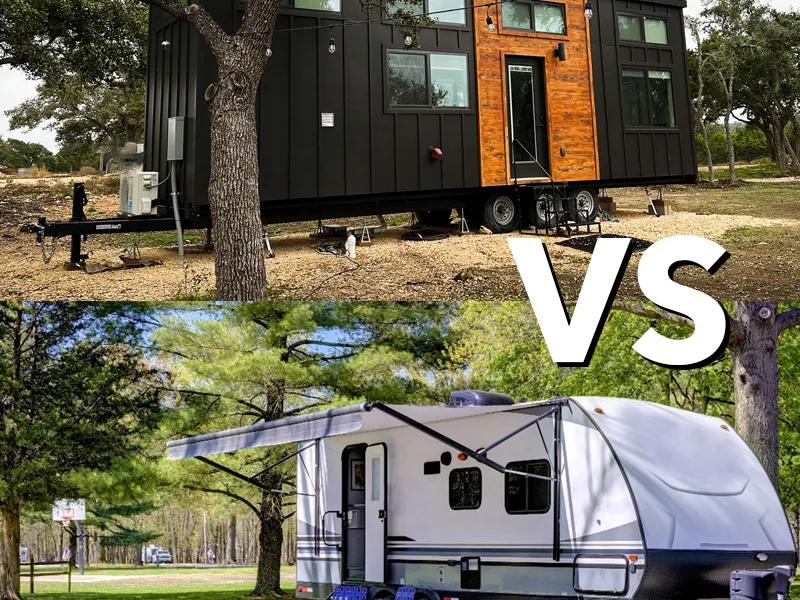
A tiny house on a permanent foundation is more likely to be treated as a standard dwelling, while a THOW may be classified as an RV or trailer. This classification affects where you can park, how long you can stay, and what utilities you can connect. In Maryland, for example, THOWs are only legal in dedicated RV parks. [2][3]
6. Check Utility and Sanitation Requirements
Even if zoning allows a tiny house, you still need to meet requirements for water, sewer or septic, electricity, and road access. These can be significant hurdles, especially for THOWs that need to connect to existing infrastructure. [5][6]
Final Thoughts
Tiny homes continue to gain acceptance across the United States, but the legal landscape remains highly local. While states such as California, Oregon, Washington, Maine, Texas, and Colorado generally provide more opportunities, the county or city where a home will be installed often determines what is actually allowed. Researching local regulations before choosing a home is the best way to avoid delays and unexpected costs. Start with the property, understand the local zoning code, and always verify current requirements with the local planning department, as regulations can change. [1][5]
Sources
1. Tiny House Zoning Laws & Regulations | State-by-State Guide 2. Tiny House Laws in the United States 3. 5 States Perfect for Tiny Houses 4. Where Are Tiny Homes Legal? 5. Which States Allow Tiny Homes? State-by-State Guide 6. What States Allow Tiny Homes on Wheels?