
Tiny House Cost Breakdown and Financing Options: A Practical Guide for US Buyers
If you're researching tiny house living, you're likely trying to answer two big questions: *How much will this actually cost?* and *How do I pay for it?* The answers depend heavily on your choices—size, materials, location, and whether you build or buy. This guide breaks down realistic costs and financing paths for the US market, based on current data and lender requirements.
Understanding the True Cost of a Tiny House
What You'll Pay: The Wide Price Range
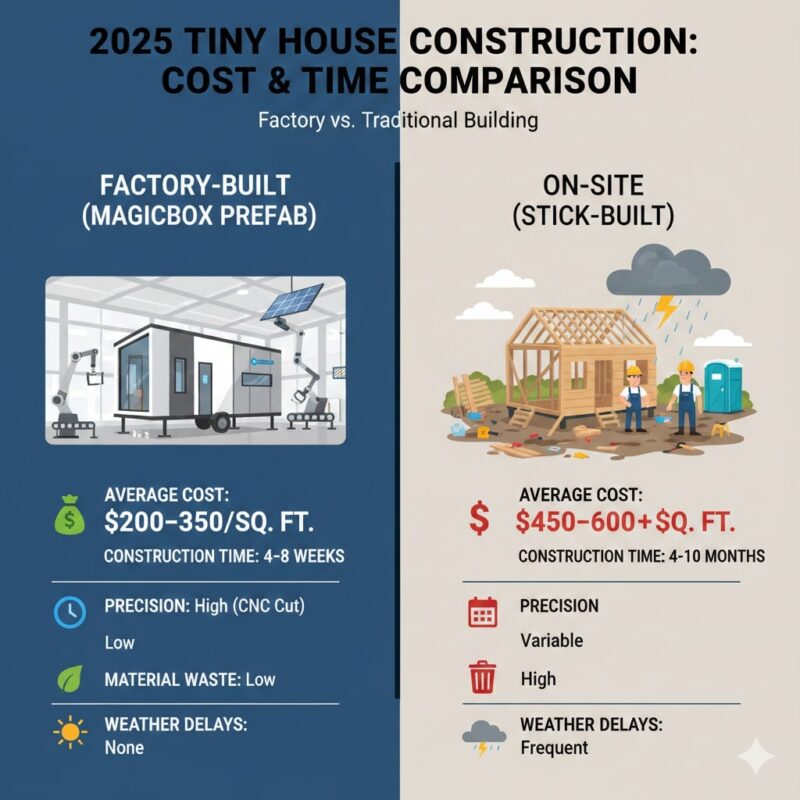
Tiny house costs vary dramatically depending on size, materials, location, and whether someone decides to build or buy prebuilt. Research shows most tiny homes in the U.S. fall between $35,000 and $80,000 to build or purchase, with the average price coming in at $67,000. On the low end, someone could buy a tiny house for as little as $8,000, and costs could reach up to $150,000 on the high end. In 2025, the average cost of a tiny house ranges between $30,000 and $100,000, depending on size, design, materials, and whether it's prebuilt or custom-made. [2][4]
Several factors influence cost, including amenities, home size, materials used, and building permit costs. A tiny home typically costs between $30,000 and $60,000, with the national average at $52,000. Building a tiny home can be more cost-effective than buying a pre-built one. [5]
Compared to a typical home in the U.S., which as of Q2 2025 costs $512,800 according to the St. Louis Federal Reserve Bank, a tiny house is 87% cheaper than a typical home. However, because all essential features are packed into a much smaller space, the cost per square foot naturally rises—you're paying for the same functionality and complexity, just in a more compact package. [2]
Breaking Down the Cost per Square Foot
Cost per square foot varies significantly by location. According to data from Porch, the least expensive states for tiny homes by square foot include Arkansas at $109, West Virginia at $118, and Kansas at $130. The most expensive states include Hawaii at $490, Connecticut at $390, and California at $354. [2]
When looking at average total prices by state, the cheapest tiny homes are found in North Dakota ($28,000), Arkansas ($31,700), and Kansas ($33,500). The most expensive are in Hawaii ($149,100), Montana ($78,400), and California ($75,600). [2]
Build vs. Buy: Cost Considerations
Building a tiny home in the U.S. can cost anywhere from $30,000 to $60,000 on average, but the range depends heavily on your choices. Simple DIY shells keep costs low, while hiring professionals and adding custom features can push prices much higher. Luxury tiny homes, complete with high-end finishes, smart features, and premium appliances, can easily exceed $180,000. Understanding these price points and what drives them is essential for planning your build. [6]
Prebuilt tiny home costs vary by size. According to Homeguide data, small prebuilt homes (90-250 sq. ft.) cost $15,000-$50,000, medium (250-300 sq. ft.) cost $30,000-$80,000, large (300-400 sq. ft.) cost $45,000-$100,000, and XL (400-600 sq. ft.) cost $70,000-$125,000. For DIY builds, costs are generally higher: small homes run $30,000-$70,000, medium $50,000-$125,000, large $80,000-$125,000, and XL $100,000-$200,000 or more. [5]
Hidden and Ongoing Costs You Must Budget For
Tiny houses generally have lower maintenance costs due to their smaller size, but owners should still budget for ongoing expenses. Don't forget maintenance, insurance, repairs, property taxes (if your tiny home is on a foundation) and community or parking fees (if your tiny home is on wheels). Over time, these expenses add up and should be included in your budget. [3]
Financing Your Tiny House: Options and Realistic Numbers
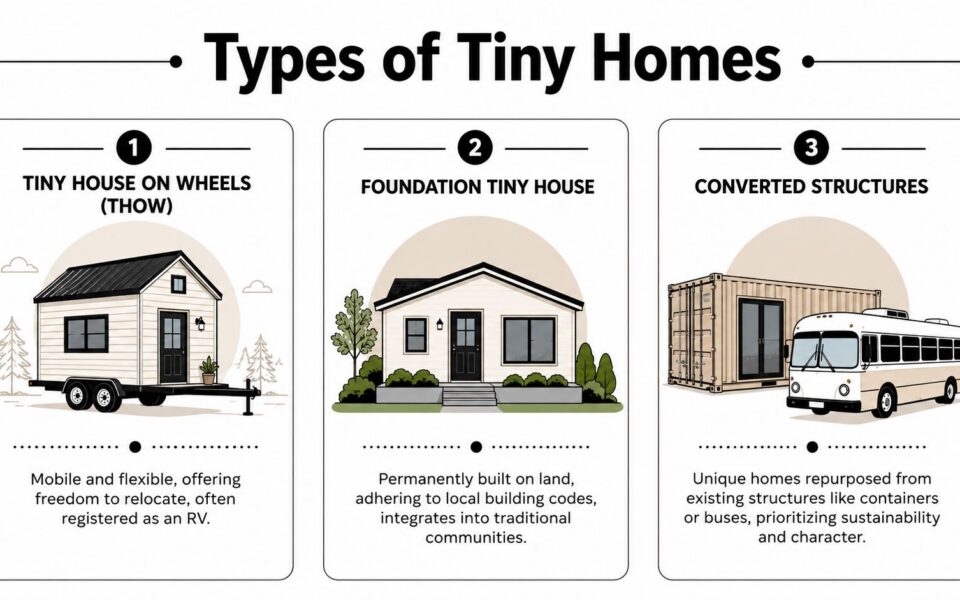
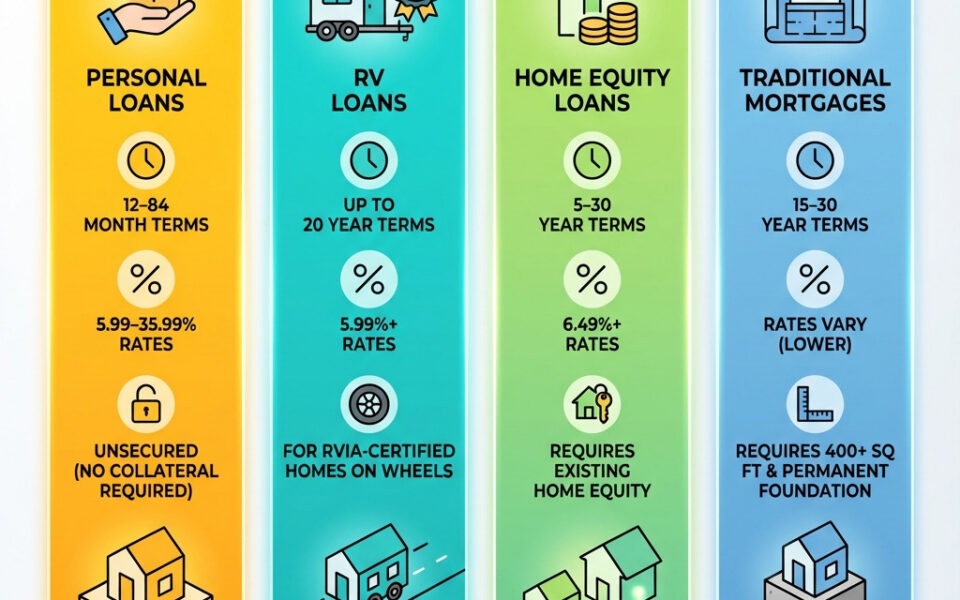
Financing a tiny house in the United States can be challenging—traditional mortgage lenders aren't used to these pint-sized dwellings, especially if they're on wheels. In fact, even if a tiny home will be your primary residence, you typically cannot get a standard mortgage for a mobile tiny house, so buyers have to explore creative financing alternatives. The good news is that as tiny homes gain popularity, lenders are slowly offering tiny-house-specific loans with rates more favorable than typical personal loans. [1]
Traditional mortgages rarely work for tiny homes due to minimum loan amounts and square footage requirements, but multiple alternative financing options exist. Most mortgage lenders have minimum loan amounts ($50,000 to $100,000), and many require homes to meet specific square footage thresholds. Many tiny homes fall below these thresholds, making conventional mortgages unavailable. [3][5]
Your options depend on whether your tiny house is on wheels or a permanent foundation, plus your credit score and income. Certification and compliance turn a risky proposition into a financeable asset. A tiny house built by a certified manufacturer and placed in accordance with zoning laws stands a much better chance of securing a loan. [1]
Personal Loans (Most Common)
Personal loans are a common financing method for tiny houses. Interest rates typically range from 6% to 36%, with terms between 12 to 60 months. Good credit scores can increase the chances of approval and lower interest rates. [3]
Limitation: Personal loans have higher interest rates than mortgages or RV loans, so your monthly payment will be higher for the same loan amount. [3]
RV Loans (For Tiny Houses on Wheels)
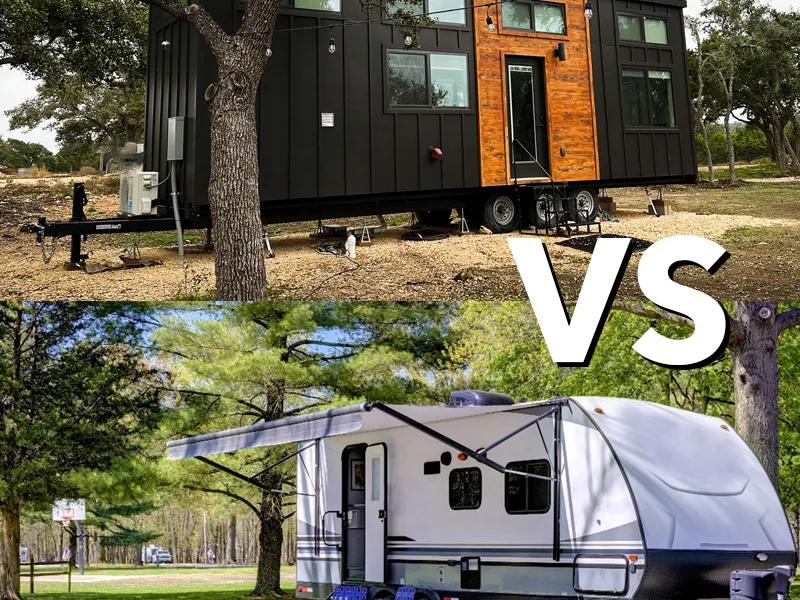
RV loans may be available for mobile tiny homes that are RVIA-certified, often offering lower rates than personal loans but requiring inspections and down payments of 10% to 20%. RVIA certification, which is needed to get an RV loan, costs more but can make getting a loan easier. [3]
Limitation: Only tiny houses that qualify as RVs may be eligible. Many custom-built or DIY tiny houses on wheels do not meet these standards, so verify with the builder before assuming you can get an RV loan. [3]
Manufacturer Financing (Direct from Builder)
Some tiny house builders offer direct financing. Terms and rates vary widely. Many builders list financing partners on their websites. [1]
Advantage: Streamlined process—you deal with one company for both the house and the loan. Limitation: Rates may not be competitive with other options. often compare with personal loans and RV loans before committing.
Traditional Mortgages (For Foundation Tiny Homes)
If your tiny house is on a permanent foundation and meets local building codes, you may qualify for a mortgage. Look at credit unions for mortgages or inquire about construction loans. Include at least one local credit union in your search, as they often have the most creative programs. [1]
Limitation: Many lenders have minimum loan amounts and square footage requirements that exceed the cost of a tiny house. [3]
Home Equity Financing
If you already own a home with equity, you may be able to use home equity financing to fund a tiny house purchase or construction. [1]
Lease Financing
Lease financing arrangements may be available through some builders or third-party lenders. [1]
Choosing the Right Financing Path
Your best option depends on your specific situation. Based on your scenario (THOW vs foundation, etc.), identify likely financing options. For example, if it's a THOW, look into RV loan providers, tiny house financing companies, and personal loan lenders. If it's a foundation tiny, look at credit unions for mortgages or inquire about construction loans. [1]
Research lenders: Use resources like articles, online forums, and builder recommendations to make a list of potential lenders. Include at least one local credit union, as they often have the most creative programs. [1]
Credit score matters: Most lenders require good credit for the best rates. Check your credit before applying, and consider improving it if you're below these thresholds. Down payment: Be prepared to make a 10% to 20% down payment depending on the financing option. [3]
Practical Limitations and Red Flags
Before you commit, understand these realities:
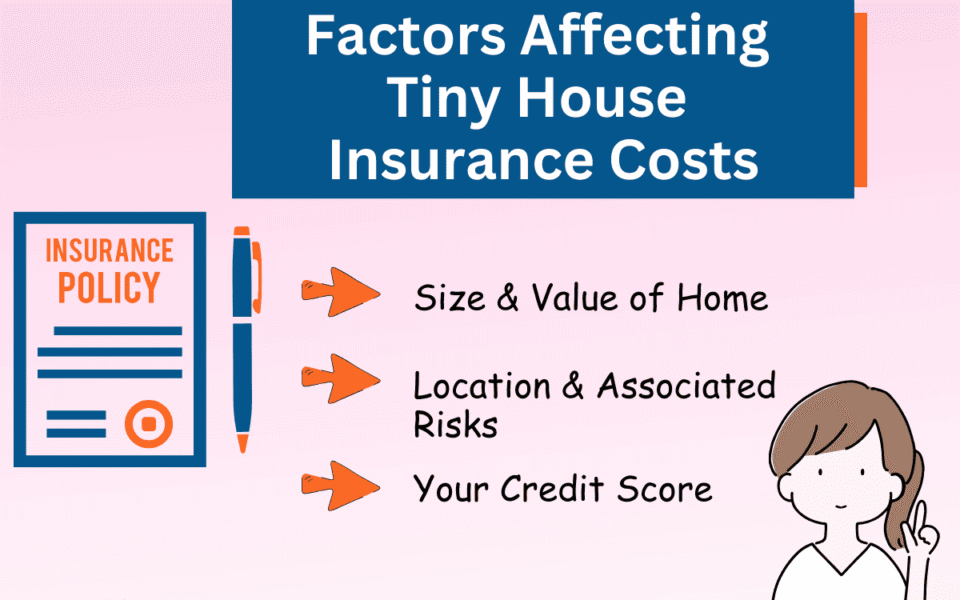
1. Financing is not may help. Not all lenders offer tiny house loans. Shop around and get pre-approved before making offers or starting construction. 2. Zoning and legality vary by location. Many areas have minimum square footage requirements or prohibit tiny houses on wheels as primary residences. Review local zoning laws before starting your project. 3. Insurance can be tricky. Standard homeowners insurance may not cover tiny houses on wheels. You may need specialty RV or tiny house insurance. 4. Land costs add up. If you don't already own land, factor in lot rent or purchase costs. 5. Resale value impacts financing. Lenders consider depreciation when evaluating loans, especially for tiny houses on wheels. 6. Compliance and certification matter. A tiny house built by a certified manufacturer and placed in accordance with zoning laws stands a much better chance of securing a loan. [1][3]
Final Recommendations
1. Compare at least three financing options. Don't settle for the first loan you find. Compare personal loans, RV loans (if applicable), and manufacturer financing. Financing a tiny home takes research and comparison, but the legwork may be worth it to fully understand your options. [3]
2. Verify current rates and terms. Interest rates and loan products change frequently. Check with multiple lenders for current APRs, terms, and requirements before making a decision. 3. Budget for the full picture. Your monthly tiny house cost includes more than just the loan payment. Factor in land, insurance, utilities, maintenance, and property taxes. 4. Consult a local professional. Zoning laws, building codes, and financing options vary by state and county. A local real estate agent, lender, or tiny house consultant can provide guidance specific to your area. Tiny house living can be significantly more affordable than traditional homeownership—87% cheaper than a typical home by purchase price alone. With a solid financing plan, you can make the most of what a tiny home has to offer, whether that's lower housing costs, a more minimalist lifestyle, or the flexibility to take your home with you wherever you go. [2][3]
—
Sources
[1] https://www.minimalistehouses.com/financing-usa
[2] https://www.rubyhome.com/blog/tiny-home-stats
[3] https://www.onemainfinancial.com/personal-loans/resources/how-to-finance-a-tiny-home
[4] https://www.amgrents.com/kissimmee-property-management-blog/the-truth-about-tiny-house-cost
[5] https://raleighrealty.com/blog/tiny-house-pricing
[6] https://constructem.com/average-cost-to-build-a-tiny-home

This Post Has 26 Comments