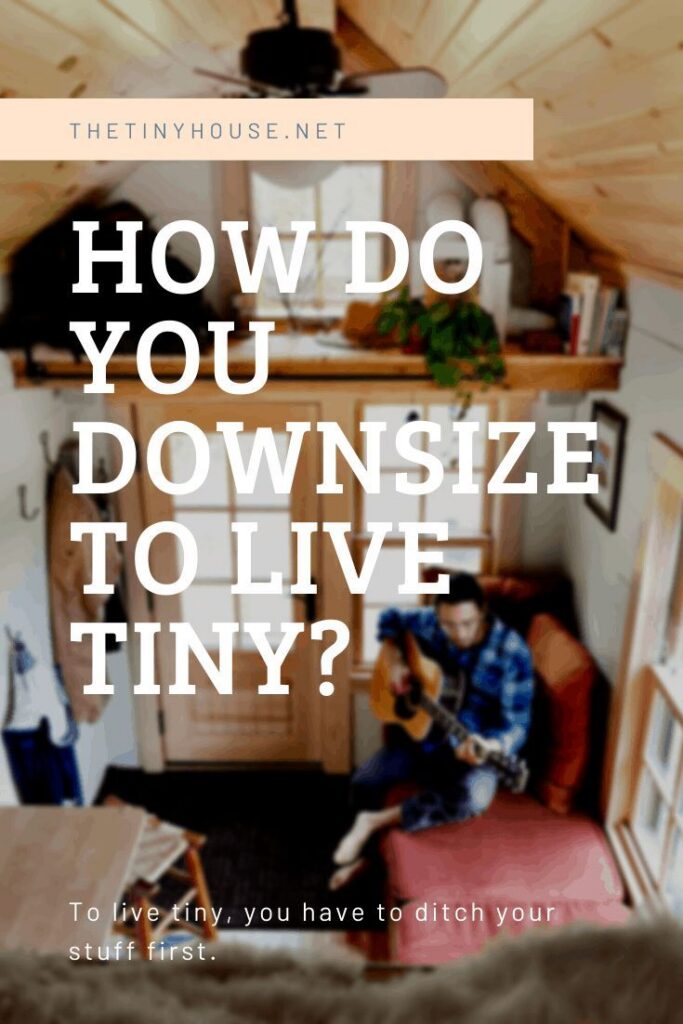
Tiny House Downsizing Tips and Strategies
Start With Self-Reflection: What Do You Really Need?
Before you begin downsizing, take time to understand your true needs versus your habits. Every inch counts in a tiny house. Ask yourself: What do you really need to be happy? Keep things with practical value and things that bring you great happiness. When planning your life or your tiny house, ask yourself the difficult questions about what you REALLY need versus what you are just accustomed to. Challenge yourself to make conscious choices about everything you buy or include in your house [4].
Experience Small Space Living Before You Commit
If you're new to the tiny house movement, consider a trial run. One approach is to put all your belongings into storage or rent out your house and try living, even if only temporarily, in a smaller building or vehicle. Actually spend a night in a tiny house to see how it feels. Try going a month with only a handful of items of clothing [3].
Another useful technique comes from the book "Little House on a Small Planet": put sticky notes on the door to every room in your house. For a month or two, write down the reason for entering every time you go into a room. By the end of that time, look to see how you're using your spaces. Many people find there are rooms in their large house they almost never use, which gives you an idea of how you really use spaces [2].
Embrace Community Sharing and Borrowing
You don't need to own everything personally if you know someone else who does. Be neighborly and lend things to your friends when they need them. Trust in them to do the same for you. Help out your neighbor, or a stranger, if they need something—not just physical items, but emotional or psychological support too. Use the library, tool-sharing programs, and your family. Don't be afraid to ask for what you need. Self-sufficiency is a quality many admire, but when it goes too far—as with the US culture of rugged individualism—we forget that it's OK to rely on others and share things. Doing so doesn't mean you have less, but more. You have connections, you have each other's backs, you have community [4].
Consider Gradual Downsizing
Many tiny house owners gradually cut down on the number of items they own. First they move from a large four-bedroom house to a cozy two-bedroom. A few years after that, they switch to a one-bedroom apartment. Then comes the tiny house. Try to cut down not enough to move into a tiny house, but enough to downsize to whatever the next level down from your starting point is. If you can manage that, try the next level, and so on [3].
Alternatively, take things one piece at a time. Each day, get rid of just one item [3].
Get Creative with Storage
When you live in a big house, there is room, a closet, and probably multiple drawers that you have just for stuff. When living in a tiny house, you may get a single drawer if you're lucky. You have to be creative with storage when moving into a tiny house. Think baskets, boxes, containers, and vertical storage. When deciding what you're going to keep, also visualize where it's going to go. For everything you decide to keep, you also need to know its place [1].
Embrace Technology and Downsizing
Evaluate what items you currently own and could be sold and replaced with a smaller version. For example, your 50-inch television could be sold and downsized to a 25-inch television. Sell your oversized furniture for furniture that better fits the space. Choose furniture that can be multipurpose like a sofa with a pull-out bed or end tables and coffee tables with hideaway storage. Also on this list, include the twenty mixed and matching plates or glasses that could be sold and replaced with a smaller number of new plates or glasses [1].
With technology, it may never be easier to live in a tiny house. Now things are smaller, faster, and better performing. Really focus on how to go paperless and switch to e-books. The giant sound system can be scaled down to a small Bluetooth speaker. Anything that can be wireless controls clutter. These things don't need to take up valuable space anymore [1].
Selling has never been easier. With technology, there are more ways and easier ways to sell our unwanted items, such as through Craigslist [1].
Prioritize Multi-Purpose Items
Choose furniture that can be multipurpose like a sofa with a pull-out bed or end tables and coffee tables with hideaway storage [1].
Invest in Quality Over Quantity
It's very satisfying and calming to surround yourself with a few things of high quality, rather than a bunch of stuff that you're not sure why you have, maybe just purchased because it was on sale. Invest in things that will last, things that are produced in accordance with your ethical standards, and things you use regularly to improve your life or bring you joy. For example, choose handmade items made locally from natural materials as opposed to plastic alternatives imported from China. Yes, the local option may cost quite a bit more, but it will pay off in the long run as it will last much longer and will bring you more joy each time you look at it or use it [4].
Use Bins for Measurement
When downsizing from a farmhouse with a playroom and individual rooms for each kid to a tiny home, one approach is to use square felt bins from a local department store to downsize toys. This gives children a visual and a better understanding that they have two bins each and if their stuff wouldn't fit it couldn't stay [2].
Group Things by Category, Not Room
When decluttering, group things by category, not room. For example, clothing, books, papers. Start with the "easiest" category, then move to the most challenging, which is typically the sentimental items. Stay focused on the task at hand. If you look at an item and have emotions other than joy, it's time to let go. Tune out the noise—this isn't something you can do with the TV on or music blaring. Silence will help you tap into your true feelings. Keep a box of tissues on hand. Sometimes, when you're alone in the quiet with your things, you realize the sentimental attachment you have to them, and it's tough to say goodbye. If the item doesn't bring you joy, thank it for its former purpose and give it the discarding it deserves [5].
Create a Capsule Wardrobe
Consider creating a capsule wardrobe, which is essentially a mini collection of your favorite clothing items. The goal is to have around 30 or 40 versatile pieces that can be worn together or mixed and matched. This helps save money and save closet space [5].
It's OK to Have a Storage Unit
If you really need one, it's perfectly acceptable to have a storage unit [1].
Start with the Items You're Excited to Get Rid Of
Don't start with the belongings that have sentimental value for you; those will be the hardest to let go of. Instead, start with the items you're itching to lose—that painting you hate, the chipped mug, or the book you know you'll never read [3].
Sources
[1] The Noshery. "Tips for Downsizing to a Tiny House." https://thenoshery.com/tips-downsizing-to-a-tiny-house
[2] Apartment Therapy. "6 Solid Downsizing Tips from Tiny Home Dwellers." https://www.apartmenttherapy.com/tiny-home-how-to-downsize-262807
[3] The Tiny House. "Downsize to Live in a Tiny House: The best resources on how to do it." https://thetinyhouse.net/downsize-to-live-in-a-tiny-house
[4] The Tiny Project. "10 Downsizing And Minimalism Tips For Tiny House Living." https://tiny-project.com/10-downsizing-and-minimalism-tips-for-tiny-house-living
[5] PODS Blog. "Pro tips for decluttering and downsizing for any small space." https://www.pods.com/blog/downsizing-for-small-space-tiny-home