7 Clever Tiny House Storage Solutions and Organization Ideas
Living in a tiny house means every square inch counts. The key to making a small home feel spacious and serene isn't just about owning less—it's about storing what you have intelligently. From vertical storage strategies to multi-functional furniture hacks, these ideas help you eliminate clutter while maintaining a minimalist aesthetic. Below are practical, evidence-backed solutions that maximize space without sacrificing style.
1. Go Vertical: Wall-Mounted Storage Systems
When floor space is limited, the walls become your most valuable real estate. Vertical storage solutions are a cornerstone of tiny house organization, allowing you to store items up and out of the way.
Wall-Mounted Shelves and Racks
Wall-mounted shelves and racks transform bare walls into functional storage. Consider installing wall-mounted bookshelves for books, decor, or kitchen supplies—these keep surfaces clear and add character to your space. For heavier items, heavy duty shelf brackets provide sturdy support for deep shelving, ideal for storing cookware, tools, or pantry goods [1].
Practical limitation: Before mounting anything, verify your wall type (stud or drywall) and use appropriate anchors. Overloading shelves can damage walls or cause injury. Always check the weight rating of your brackets and fasteners against the items you plan to store.
Hanging Hooks and Racks
Hooks are a simple yet powerful tool for tiny homes. Space-saving gear hooks work well for coats, bags, hats, or kitchen utensils. For outdoor gear or tools, hose hanging brackets or magnetic hose hangers keep hoses tidy and off the ground. In the bathroom, wall-mounted organizer baskets hold toiletries without cluttering countertops. [1]
Recommendation: Install a row of hooks near the entryway for daily-use items like keys, bags, and jackets. This prevents clutter from spreading throughout the home.
2. Maximize Under-Bed and Overhead Space
Dead zones like the space under your bed or above your head are prime real estate for storage.
Under-Bed Storage
The area beneath your bed can hold seasonal clothing, linens, or gear. Bed frame risers lift your bed higher, creating more clearance for storage bins or drawers underneath. Pair these with moisture-proof barrier films to protect items from dust and humidity, especially in damp environments. [2]
Practical limitation: Bed risers may make your bed less stable or harder to get into. Measure your bed frame and ceiling height before purchasing. Also, avoid storing heavy items that could make the bed difficult to lift or shift.
Overhead Ceiling Storage
Ceiling-mounted storage is ideal for items you don't need daily. Elastic storage nets or breathable storage nets can be installed overhead to hold lightweight items like blankets, pillows, or off-season clothing. For heavier gear, ceiling-mounted racks provide sturdy storage for bikes, kayaks, or camping equipment. [2][5]
Safety note: Ensure ceiling mounts are secured to joists, not just drywall. Overhead storage should never block emergency exits or interfere with lighting.
3. Multi-Functional Furniture and Hidden Compartments
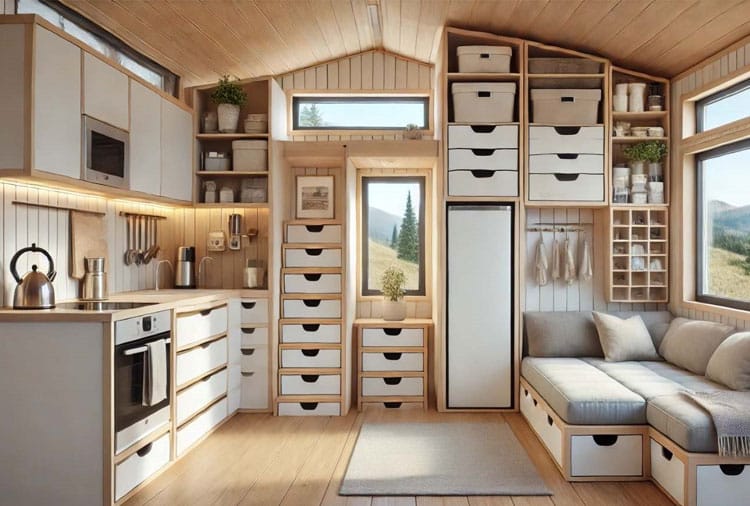
Furniture that serves double duty is a tiny house essential. Look for pieces that combine seating, sleeping, and storage.
Built-In and Modular Solutions
Modular shelving solutions allow you to customize storage as your needs change. For example, a modular cube system can hold books, baskets, or electronics. Sliding bookshelves are another clever option—they hide behind other furniture or walls, revealing storage only when needed. [4][5]
Hidden compartments can be integrated into stairs, benches, or window seats. For instance, stair treads that lift up reveal drawers or cubbies underneath, turning a dead zone into valuable storage [3].
Furniture with Storage
Choose a bed with built-in drawers, a coffee table with lift-top storage, or an ottoman that opens to hold blankets. Seat base storage nets fit under bench cushions, keeping items organized and out of sight. Bedside caddies attach to bed frames or nightstands, holding phones, books, and glasses without taking up surface space. [2]
Recommendation: When shopping, measure your space and the furniture's storage capacity. A piece that's too large will make the room feel cramped, defeating the purpose.
4. Organize Awkward and Angular Spaces
Corners, nooks, and irregularly shaped areas often go unused. With the right approach, these can become some of your most functional storage zones.
Corner Storage
Corner shelves or corner cabinets fit snugly into angles, providing display or storage space. For hidden storage, consider corner pull-out drawers that maximize every inch of an L-shaped kitchen or closet. Clever storage ideas for irregularly shaped corners include custom-built shelving that follows the room's contours. [4]
Under-Sink and Cabinet Organization
Under-sink areas are notoriously cramped. Under-sink organizers with pull-out trays or tiered shelves make it easy to access cleaning supplies without digging. In cabinets, collapsible fabric dividers keep pots, pans, and lids separated and easy to grab. [5][2]
Practical limitation: Not all under-sink organizers fit all cabinet sizes. Measure the interior dimensions (including pipes) before buying. Adjustable or modular systems offer the most flexibility.
5. Small Kitchen and Pantry Storage Hacks
Kitchens in tiny homes require efficient organization to prevent countertop chaos.
Pantry and Cabinet Solutions
Pantry solutions for small kitchens include pull-out shelves, door-mounted racks, and tiered can organizers. Space-saving hanging baskets for pantries hold fruits, vegetables, or snacks while keeping counters clear. Modular sink storage racks fit over or beside the sink for drying dishes or storing sponges. [5][1][2]
Freezer and Fridge Organization
Maximize freezer space with silicone muffin tins—they create portioned compartments for frozen foods like soups, sauces, or leftovers [1]. Use clear bins and labels to keep fridge contents visible and accessible.
Recommendation: Group similar items together (e.g., all canned goods, all spices) and use vertical dividers for cutting boards and baking sheets. This reduces time spent searching and prevents overbuying.
6. Bathroom and Laundry Organization
Bathrooms in tiny houses are often compact, but smart storage keeps them functional.
Wall-Mounted Bathroom Storage
Wall-mounted organizers for tiny bathrooms include shelves over the toilet, magnetic strips for metal grooming tools, and caddies for shower products. Laundry supply wall racks hold detergent, dryer sheets, and stain removers without taking up floor space. [3][1]
Compact Laundry Solutions
For mobile living or tiny homes without full laundry rooms, compact laundry solutions like portable washing machines or stackable washer-dryer units save space. Stackable laundry baskets keep dirty clothes sorted and out of sight. [4][5]
Practical limitation: Portable laundry appliances often have smaller capacities and longer cycle times. Verify water and power requirements before purchasing.
7. Seasonal and Gear Storage
Storing seasonal items, outdoor gear, and hobby equipment can be challenging in a tiny home.
Seasonal Storage
Efficient storage solutions for seasonal items include vacuum-sealed bags for bulky winter clothing, clear bins labeled by season, and under-bed storage for holiday decorations [4]. Space-efficient containers for seasonal storage stack neatly and fit into closets or under furniture.
Gear and Hobby Storage
For active lifestyles, gear storage solutions keep bikes, fishing rods, or camping equipment organized. Bike storage furniture like wall-mounted racks or foldable stands keep bikes secure without taking up floor space. Fishing storage ideas include wall-mounted rod racks and tackle boxes that fit in closets. [4]
Recommendation: Rotate seasonal gear to keep only current-season items accessible. Store off-season equipment in overhead or under-bed areas.
Practical Limitations to Keep in Mind
While these ideas are effective, they come with practical constraints:
- Weight limits: Always check the weight rating of shelves, hooks, and ceiling mounts. Overloading can cause damage or injury.
- Wall type: Drywall anchors may not support heavy loads. Use studs for heavy items or consult a professional.
- Ventilation and moisture: In damp environments, avoid storing items in sealed plastic bins without ventilation. Use moisture-proof barriers or breathable storage nets [2].
- Accessibility: Ceiling and high-wall storage should be reserved for items you rarely need. Daily-use items should be within easy reach.
- Fire safety: Never block exits, vents, or electrical panels with storage.
Final Thoughts
Tiny house storage is about working *with* your space, not against it. By combining vertical storage, multi-functional furniture, and clever organizers, you can create a home that feels open, organized, and uniquely yours. Start with one area—like under the bed or a wall in the kitchen—and build from there. Small changes add up to a big difference.
—
Sources
1. Habitatista, "Tiny House Storage Solutions," Page 2. https://www.habitatista.com/category/tiny-houses/tiny-house-storage-solutions/page/2 2. Habitatista, "Tiny House Storage Solutions," Page 3. https://www.habitatista.com/category/tiny-houses/tiny-house-storage-solutions/page/3 3. Habitatista, "Tiny House Storage Solutions," Page 36. https://www.habitatista.com/category/tiny-houses/tiny-house-storage-solutions/page/36 4. Habitatista, "Tiny House Storage Solutions," Page 34. https://www.habitatista.com/category/tiny-houses/tiny-house-storage-solutions/page/34 5. Habitatista, "Tiny House Storage Solutions," Page 35. https://www.habitatista.com/category/tiny-houses/tiny-house-storage-solutions/page/35