Finding Land for a Tiny House: A Practical Guide for US Buyers
Finding the right piece of land for a tiny house requires navigating local regulations that vary from one county to the next. This guide walks through what you need to know before you start shopping for land, based on available source information about current laws and regulations.
Understanding Zoning Laws and Building Codes
The single most important factor in finding land for a tiny house is understanding local zoning regulations and building codes. These laws vary widely between regions and determine whether you can legally place a tiny home on a specific piece of property. Some areas have minimum size requirements for homes, while others might restrict the types of dwellings allowed on residential lots. [1]
Since 2007, tiny homes have become increasingly popular in the United States. The 2018 International Residential Code (IRC) defines a tiny house as a dwelling with a floor area of 400 square feet or less, excluding lofts, and requires a minimum ceiling height for habitable spaces of not less than 6 feet 8 inches, as well as compliance with emergency escape and rescue openings specifications. [2]
Before you look at a piece of land, contact the local planning or zoning department for the county or municipality where the property is located. Ask specifically whether the zoning ordinance defines "tiny house" or "tiny home," what the minimum square footage requirements are for a dwelling on that lot, whether a tiny house on wheels is treated as a recreational vehicle or a dwelling unit, and whether accessory dwelling units (ADUs) are permitted. [1][2]
A local government can permit permanent occupancy of tiny homes by amending its zoning code to specifically permit use of land for tiny homes as a primary or secondary detached dwelling unit in existing residential districts. Generally, an ordinance permitting tiny homes as permanent dwellings requires a match between the definition of "detached second dwelling unit" and/or "single-family home" under permitted land uses in the local zoning ordinance and the specifications set out for tiny homes. [2]
Local governments may permit tiny homes by-right or upon: 1) conditional use permit by the planning commission; 2) special exception by the zoning board; or 3) building permit approved and issued by the building inspector. [2]
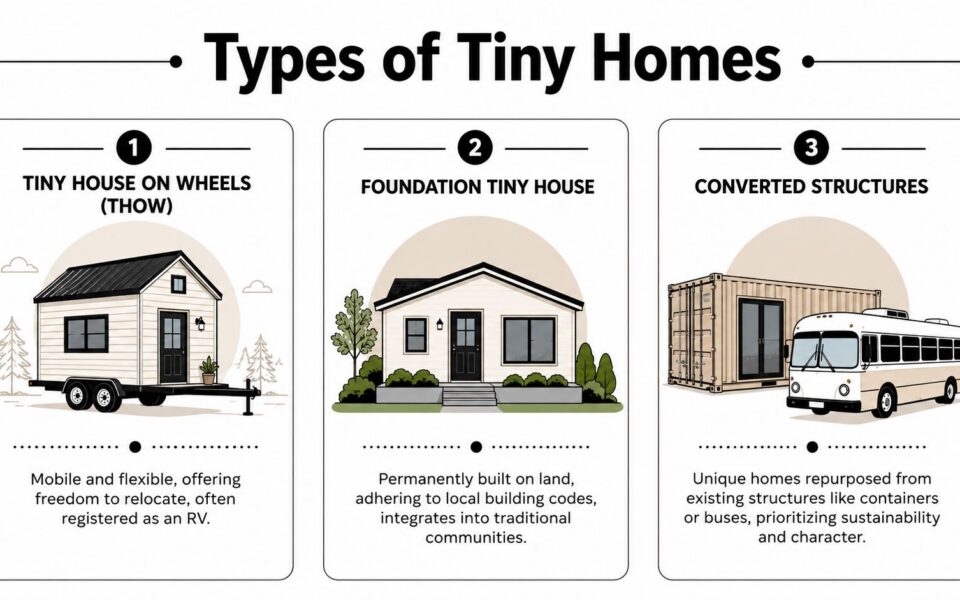
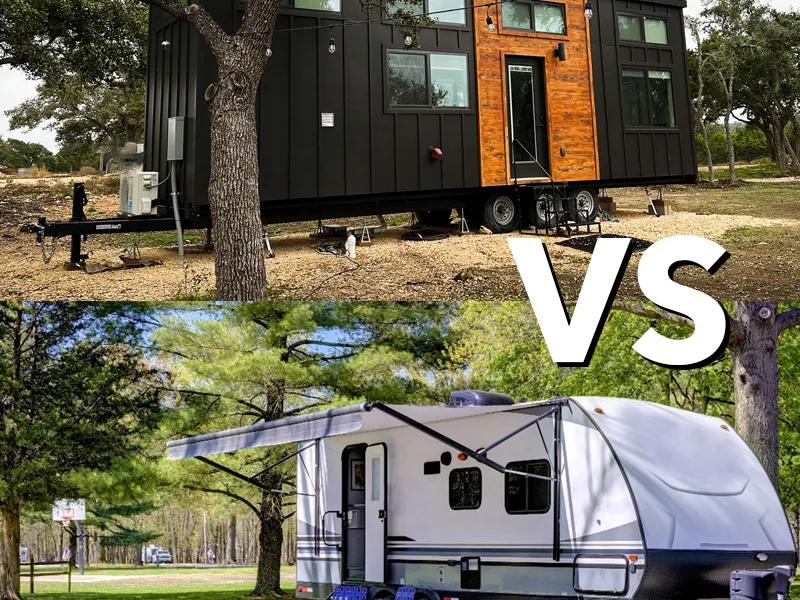
Tiny houses on wheels often face additional complications. In some states, tiny houses on wheels need to be registered with the Department of Motor Vehicles as a travel trailer. In Nevada, individuals must abide by local regulations, and in Clark County, sheds over 200 square feet require a building permit. [5]
Types of Land to Consider
Urban and Suburban Land
In cities or suburbs, it can be difficult to find land without strict building restrictions, and costs can be higher. Some homeowners choose to lease or buy land in tiny house communities, where the land is already zoned for smaller homes. [1]
Rural Land
Rural areas are often more flexible when it comes to building codes and zoning laws. Here, you can find larger plots with more freedom to design your tiny house without as many restrictions. However, you may need to install your own utilities such as a septic system, water supply, and electricity. [1]
Rural areas of Pennsylvania will likely be the easiest when it comes to finding a place to park a tiny house, though you should always check with local municipalities for specifics. Pennsylvania is one of the friendlier tiny house states to date, and a community in Elizabethtown claims to be the largest tiny house community in the United States. [5]
Practical Considerations for Buying Land
Utility Access
One of the most overlooked aspects of buying land for a tiny house is utility access. Rural properties may require you to install your own septic system, drill a well for water, and arrange for electricity connection. These costs can add significantly to your overall budget, so factor them in before making an offer. For properties closer to existing infrastructure, verify that utility connections are available and what the hookup fees will be. [1]
Covenants, Conditions, and Restrictions (CC&Rs)
Even if zoning allows tiny homes, private covenants, conditions, and restrictions (CC&Rs) on a property may prohibit them. Tiny homes are likely not allowed in areas where there are restrictive CC&Rs. [5] Before purchasing any land, obtain a copy of the CC&Rs from the homeowners' association or the seller and read them carefully for any restrictions on dwelling size, type, or placement.
Finding Available Properties
Online platforms such as Zillow, LandWatch, and local real estate listings can help you identify available plots. Working with a real estate agent experienced in tiny home projects can also streamline the process. [1]
State-by-State Variations
Tiny house friendliness varies significantly by state. Requirements may vary considerably between neighboring jurisdictions. One community may permit a compact foundation-built home, while another may impose a higher minimum dwelling size or limit a movable unit to temporary or recreational use. [5]
Hawaii scores 5 out of 10 on tiny house friendliness, with regulations varying by city, town, or county. Tiny homeowners can purchase a plot of land for their tiny house. Tiny houses on wheels need to be registered with the Department of Motor Vehicles as a travel trailer. Tiny houses on wheels count as dwelling units but are subject to strict zoning restrictions. [5]
Nebraska has drafted an official document that references the different types of tiny houses. The document states that it is up to local jurisdictions when it comes to zoning requirements. [5]
Nevada scores 7 out of 10, making it fairly welcoming toward tiny houses, but individuals must abide by local regulations. In Clark County, sheds over 200 square feet require a building permit, and ADUs cannot have kitchen or cooking facilities. [5]
Rhode Island scores only 2 out of 10, with tiny houses not acknowledged in ordinances by the city of Providence. [5]
Texas offers a wide range of possibilities because land-use rules can differ significantly between cities, counties, and unincorporated areas. Some rural locations have fewer zoning restrictions, while larger cities tend to regulate tiny homes and ADUs through detailed development codes. [5]
Washington has expanded opportunities for tiny homes through building standards and local housing policies that recognize smaller residential structures. [5]
In Alabama, Arkansas, Delaware, Indiana, Iowa, Kentucky, Mississippi, Nebraska, New Hampshire, New Mexico, Ohio, Rhode Island, South Carolina, and South Dakota, buyers should avoid assuming that one statewide rule answers the question. [5]
Practical Steps for Your Search
1. Research zoning first: Before looking at specific properties, research the zoning regulations in your target area. Contact the local planning department and ask about tiny house allowances. [1][2]
2. Use online platforms: Zillow, LandWatch, and local real estate listings can help you identify available plots. Filter by acreage and price range, then research the zoning for promising properties. [1]
3. Work with a knowledgeable agent: A real estate agent experienced in tiny home projects can help you navigate the complexities of finding land that meets your needs. [1]
4. Check for CC&Rs: Obtain and review any covenants, conditions, and restrictions before making an offer. [5]
5. Verify utility options: Determine whether the property has access to water, sewer, and electricity, and what it will cost to connect or install systems. [1]
6. Consider tiny house communities: If navigating regulations on your own seems overwhelming, look into existing tiny house communities where the land is already zoned for smaller homes. [1]
7. Consult local building officials: Before purchasing, have a conversation with the local building inspector about what permits will be required and whether your specific tiny house design will meet code. [1][2]
Final Thoughts
Finding land for a tiny house requires patience, research, and often a willingness to compromise. Rural areas generally offer more flexibility but require more investment in utilities. Urban and suburban areas may have stricter regulations but offer proximity to amenities and jobs. By doing your due diligence—understanding the legal requirements, researching zoning laws, and considering utilities—you will be well-prepared to find and buy land for your tiny house. [1]
Whether you choose a rural plot with complete independence or a tiny house community with shared resources, owning the right piece of land will set the foundation for your tiny house living dream.
—
Sources
1. https://aplusconstructionremodeling.com/blog/buying-land-for-a-tiny-house 2. https://sustainablecitycode.org/brief/allow-tiny-homes-and-compact-living-spaces-4 3. https://www.tinysociety.co/articles/tiny-house-laws-united-states 4. https://www.azureprintedhomes.com/which-states-allow-tiny-homes 5. https://scholarship.law.tamu.edu/cgi/viewcontent.cgi?article=1075&context=journal-of-property-law