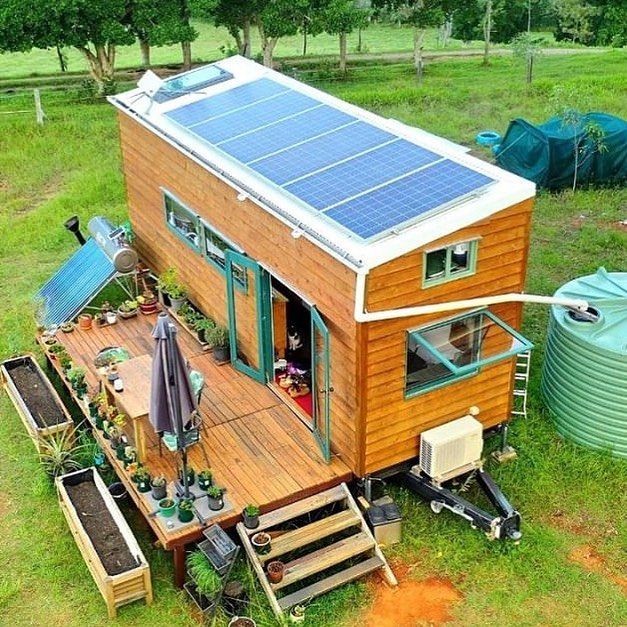
A Practical Guide to Off-Grid Tiny House Utilities and Systems
Living off the grid in a tiny house means your home operates independently from public utility services like electricity, water, and sewer systems [3]. This independence offers freedom from monthly utility bills, but it also requires careful planning and honest self-assessment of your needs. Here’s what you need to know about designing and managing the core systems that make off-grid tiny house living work.
Understanding What "Off-Grid" Really Means
An off-grid tiny house is not connected to any public utilities for electricity, water, or sewer [3]. Every drop of water you use must be collected, stored, or hauled in. Every watt of electricity must be generated and stored on-site. Every bit of waste must be managed without a municipal sewer connection. This fundamental reality shapes every decision you make about your home's systems.
Before you invest in any equipment, start by assessing your power use, water options, waste requirements, and climate risks. A little careful research now can save major cost and frustration later. Build a simple checklist, talk to local officials and installers, and choose the path that fits your real life. [5]
Power Systems: Generating and Storing Electricity
Solar Photovoltaic Systems
Solar photovoltaic systems are the most common renewable energy source for off-grid tiny houses, deployed in approximately 78% of installations. This popularity stems from favorable installed costs, minimal maintenance requirements, and widespread geographic suitability across the United States. [2]
A typical off-grid tiny house solar setup includes panels, a charge controller, batteries, and an inverter. Standard sustainable features include solar photovoltaic systems of 3 to 5 kilowatt capacity. However, because tiny houses usually do not use much electricity, the cost of an off-grid solar installation—including the battery bank—may take a long time to "pay back" compared to grid-connected alternatives. State-level renewable energy initiatives in California and Texas have reduced solar panel costs substantially, making off-grid systems economically comparable to grid-connected alternatives when accounting for long-term electricity bill savings. [2][4]
Battery Storage
For battery charging and long-term storage, follow the manufacturer instructions for your exact model; recommended charge levels and storage procedures vary by mower. For most tiny houses, lithium-ion battery storage of 10 to 20 kilowatt-hours is standard. [2]
Hybrid Systems
Hybrid systems combining solar with wind or backup propane generators account for 18% of installations, particularly in regions with seasonal variation or persistent cloud cover [2]. If you live in an area with long stretches of overcast weather, a hybrid approach may be more reliable than solar alone.
Smart Inverters and Monitoring
Smart inverters and charge controllers with real-time monitoring capabilities have become standard equipment in 73% of new off-grid tiny house installations [2]. These systems let you track your energy production and consumption, helping you avoid draining your batteries unexpectedly.
Reducing Your Power Demand
One of the most effective strategies for off-grid living is reducing your electricity needs. Consider using DC current for your entire house by choosing appliances and fixtures designed for DC power. Alternatively, consider using a propane refrigerator, stove, and/or water heater to help keep electricity demand low. Propane appliances can dramatically reduce the size of the solar and battery system you need. [4]
Keep in mind that an inverter is not 100% efficient—typically 5% to 20% of power is lost in the DC to AC conversion [4]. Every watt you save on the DC side means less loss in conversion.
Water Systems: Fresh Water and Wastewater
Fresh Water Supply
Off-grid tiny houses must collect, store, or haul their own water. Rainwater harvesting is a common approach, with advanced units incorporating these systems [2]. The size of your storage tank depends on local rainfall patterns, roof collection area, and your daily water usage. In drier climates, you may need to supplement rainwater with hauled water from a local supplier.
Wastewater Management
Greywater recycling systems are a standard sustainable feature in many off-grid tiny houses [2]. Greywater—water from sinks and showers—can be treated and reused for irrigation or toilet flushing, reducing your total water demand significantly.
For human waste, composting toilets are a practical off-grid solution [2]. These systems require no water and no sewer connection, making them ideal for tiny houses. They do require proper maintenance and periodic emptying of the compost chamber.
Heating, Cooling, and Insulation
Insulation and Windows
Because tiny houses have less space to heat and cool, high-quality insulation is critical. Standard sustainable features include insulation achieving R-40 to R-60 ratings. Low-emissivity windows reduce heat transfer by 30 to 40 percent. These investments pay off by reducing the size of your heating and cooling systems and your overall energy needs. [2]
Efficient HVAC
Efficient mini-split heat pumps are a common choice for off-grid tiny houses [5]. These systems provide both heating and cooling with high efficiency, and they run on electricity, which your solar system can supply.
Propane Systems
Propane is a common supplemental fuel source in off-grid tiny houses. It can power refrigerators, stoves, water heaters, and backup generators [4]. Propane systems require careful safety planning, including proper ventilation, leak detection, and secure storage of propane tanks. Always follow manufacturer safety guidelines and local codes for propane installation.
Legal and Regulatory Considerations
Zoning and Classification
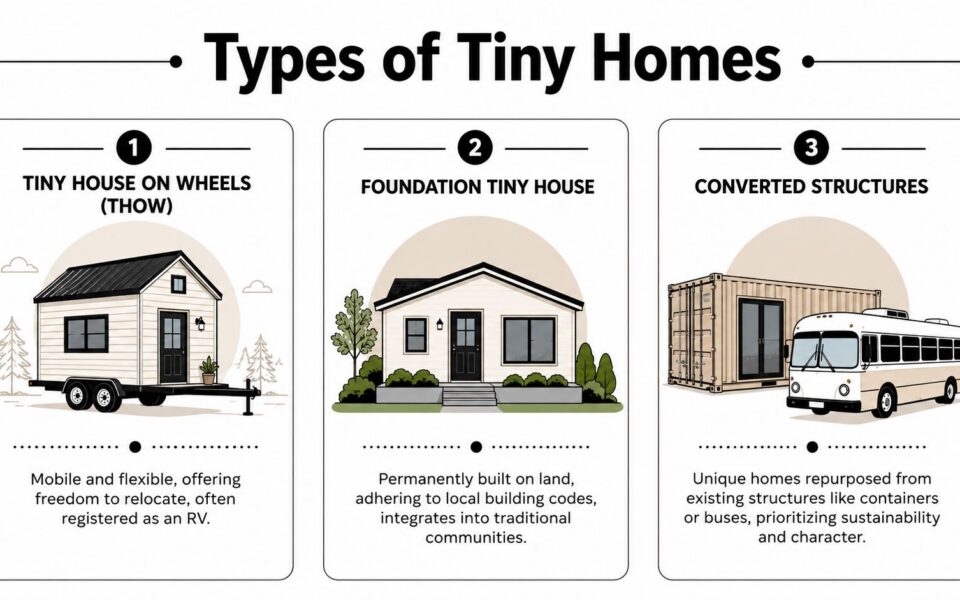
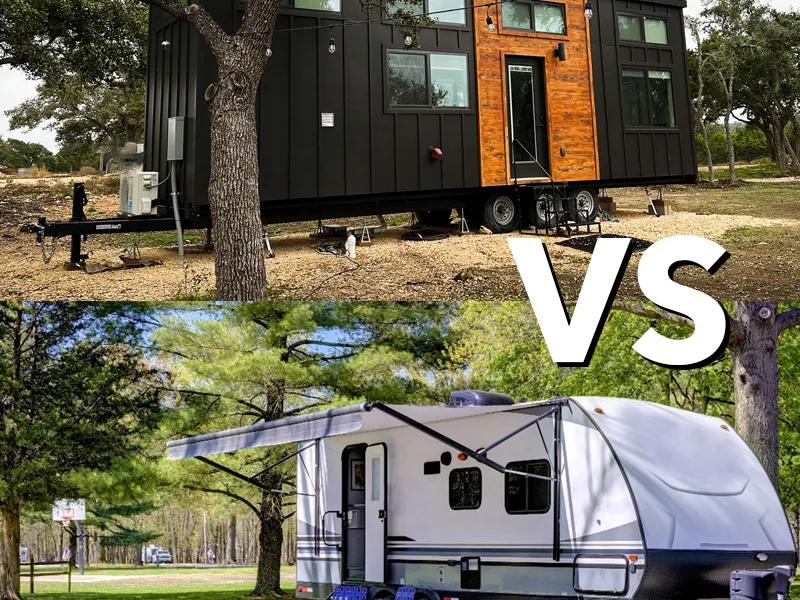
Legal classification matters significantly for off-grid tiny houses. Some tiny homes are treated as RVs, others as accessory dwelling units (ADUs), and others as permanent dwellings. That classification affects where they can be parked, how they can be occupied, and what utility or sanitation systems they must have. [5]
Regulatory developments in states like Oregon and Washington now permit ADUs on residential properties without separate lot requirements, effectively creating a path for tiny houses within suburban and rural settings [2]. However, local regulations vary widely, so you must research your specific jurisdiction.
Permitting and Compliance
When you build an off-grid tiny house, local authorities typically require that your home's wiring and systems meet established safety standards, including the National Electrical Code (NEC) and any relevant local codes. This generally means you will need a licensed electrician to handle installation or inspection, ensuring all wiring is properly grounded and protected. [6]
Key requirements that local building departments typically enforce include:
- Egress: Every sleeping area must have a dedicated escape route, such as an operable window or an exterior door.
- Sanitation: An approved plumbing system with access to water and waste disposal is needed to qualify as a habitable dwelling.
- Ventilation: Proper airflow is crucial, often achieved through mechanical ventilation or operable windows. [6]
Making compliance a priority early on saves time, money, and stress, creating a more seamless path to tiny house living [6].
Practical Limitations and Balanced Recommendations
The Affordability-Sustainability Tradeoff
There is an inherent tension between affordability and sustainability in off-grid tiny houses. Some projects prioritize sustainability above all else, which can increase upfront costs [1]. Be realistic about your budget and what level of sustainability you can afford. A simpler system that you can maintain and afford is better than an ambitious system you cannot complete or repair.
System Sizing
Do not oversize or undersize your systems. A tiny house off grid can be an efficient path because the structure needs less energy to heat, cool, and light. A smaller roof area may still support enough solar for modest usage. But tiny does not automatically mean easy. Calculate your actual energy needs using a detailed load assessment before buying equipment. [5]
Maintenance and Monitoring
Off-grid systems require ongoing maintenance. Batteries degrade, solar panels need cleaning, and composting toilets need management. Research the correct type of panels and components for the amount of sun and shade you get, as well as your collection and storage needs [4]. Plan for regular maintenance and budget for eventual component replacement.
Start with a Hybrid Approach
If you are considering off-grid homes, start by assessing your power use, water options, waste requirements, and climate risks. Then compare a fully off-grid plan with a hybrid setup. A hybrid approach—using solar with a backup generator or maintaining a grid connection for emergencies—can provide reliability while you learn what your systems can handle. [5]
Sources
1. Siegner, A. B., Webster, B., Bolliger, I., & Kammen, D. M. (2022). Energy and Water Performance of an Off-Grid Tiny House in California. *Journal of Green Building*. https://rael.berkeley.edu/wp-content/uploads/2022/01/Siegner-Webster-Bolliger-Kammen-TinyHouse-2022.pdf
2. Dataintelo. (2024). Off-Grid Tiny House Market Research Report 2034. https://dataintelo.com/report/off-grid-tiny-house-market
3. Clever Tiny Homes. (n.d.). What is an Off-Grid Tiny Home? https://clevertinyhomes.com/blog/what-is-an-off-grid-tiny-home
4. The Tiny Project. (2016). Tiny House Utilities. https://tiny-project.com/wp-content/uploads/2016/05/TheTinyProject_Utilities.pdf
5. Anker SOLIX US. (n.d.). Off Grid Homes: Pros, Costs, and Key Tradeoffs. https://www.ankersolix.com/blogs/home-power-backup/off-grid-homes
6. My Cocoon Homes. (n.d.). Navigating Regulations for Tiny Homes in the USA. https://mycocoonhomes.com/blog/navigating-regulations-for-tiny-homes-in-the-usa