The Complete Guide to Sustainable Tiny House Materials and Eco-Friendly Building
Building a tiny house is one of the most exciting ways to reduce your environmental footprint, but size alone doesn't guarantee sustainability. Research shows that tiny homes can actually have a higher environmental impact per square foot than conventional houses if built with conventional materials [3]. The key lies in choosing the right sustainable materials and construction methods from the start.
Why Material Choices Matter in Tiny House Construction
Every building material carries an environmental cost from extraction through manufacturing, transportation, installation, and eventual disposal. This is called its life cycle. When you build small, you have an opportunity to minimize that impact by selecting materials that are renewable, locally available, and non-toxic. Sustainable materials lead to less waste, less energy consumption, and less landfill waste compared to conventional options [2].
Timber stands out as one of the most sustainable building materials available. Unlike concrete or steel, which are non-renewable and energy-intensive to produce, timber is renewable and has a low embodied carbon footprint [2]. Trees absorb carbon dioxide as they grow, and that carbon remains stored in the wood throughout the life of your home.
Top Sustainable Materials for Your Tiny House
Thermally Modified Wood for Exteriors and Decking
Thermally modified wood, often called thermowood, has become increasingly popular in minimalist tiny houses. This process uses heat and steam to alter the wood's cellular structure, making it more durable and resistant to moisture without chemical treatments. It offers exceptional durability, low maintenance, and a pleasing aesthetic. [5][2]
When choosing decking or siding materials, thermally modified wood outperforms plastics and concrete in sustainability because it's renewable and biodegradable at end of life. You can find examples of this material in eco-retreats like the Yoki Treehouse in Austin, Texas, which uses thermowood cladding. [2]
Natural Insulation Options
Insulation is one of the most critical components for energy efficiency, and several natural options outperform synthetic alternatives:
- Cellulose insulation is made from recycled paper and provides excellent thermal performance while allowing healthy air circulation. It's non-toxic and even compostable after use.
- Cork is renewable, naturally fire-resistant, and provides excellent thermal performance. It's also biodegradable.
- Sheep's wool is breathable, moisture-regulating, and highly efficient as an insulator.
- Hemp is eco-friendly, biodegradable, durable, and naturally pest-resistant. [3]
Earth-Based Building Techniques
Traditional construction methods using natural materials offer remarkable sustainability benefits. One technique called *quincha* uses a framework of wood or bamboo filled with a mixture of earth, straw, and lime. A life cycle assessment study found that quincha construction significantly reduces carbon footprint compared to conventional building methods that rely on synthetic or industrial materials [4].
Other natural building materials include:
- Hempcrete – a mixture of hemp fibers and lime that provides excellent insulation and carbon sequestration
- Cordwood – log-ends set in mortar for walls, using small-diameter timber that might otherwise go to waste
- Rammed earth – compressed soil that creates durable, thermally massive walls [1]
These techniques use locally sourced and recycled materials, which not only reduces environmental impact but also supports local economies [4].
Designing for Long-Term Sustainability
Durability Means Sustainability
The most sustainable material is the one you don't have to replace. Choose rot-resistant wood, sealed siding, and metal roofing that hold up to weather, wear, and travel, minimizing replacements and landfill waste. This approach applies inside your tiny house too—invest in long-lasting, sustainably made furniture, fixtures, and appliances rather than cheap items that need frequent replacement. [3]
Passive Solar Design
Orienting your tiny house to maximize passive solar heating and cooling can dramatically reduce energy needs. Large south-facing windows (in the Northern Hemisphere) allow winter sun to warm interior thermal mass like concrete or stone floors, while proper overhangs block summer sun [1]. This reduces your reliance on mechanical heating and cooling systems.
Quality Over Quantity
A tiny house forces you to prioritize. Take the same approach with materials and furnishings. Having fewer, better-made pieces reduces clutter and lasts longer. Classic finishes and neutral palettes won't go out of style, helping you resist costly, resource-heavy renovations. [3]
Practical Steps for Building Eco-Friendly
Source Locally Whenever Possible
Transportation accounts for a significant portion of building materials' carbon footprint. Look for local suppliers of timber, stone, and other natural materials. Many regions have small sawmills that can provide locally harvested wood, and you may find reclaimed materials from demolition sites.
Consider a Rainwater Collection System
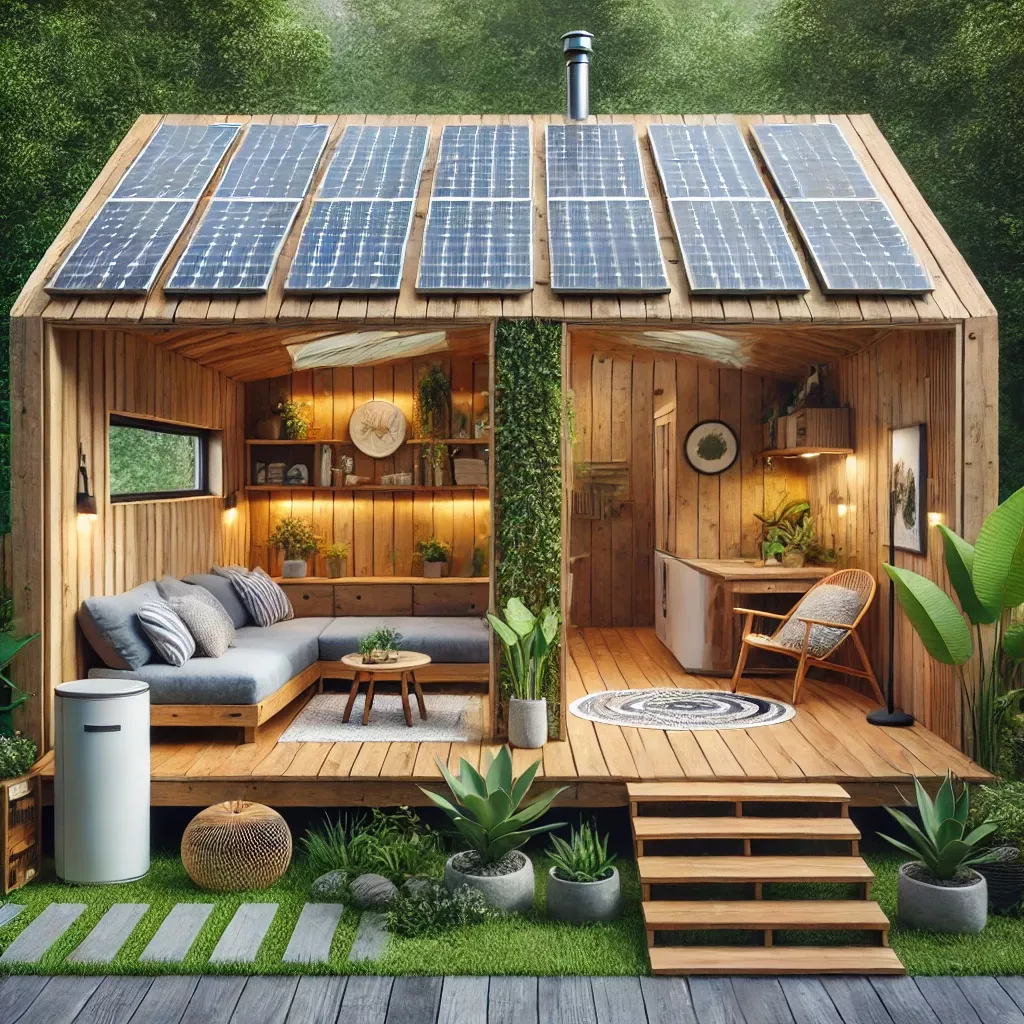
For off-grid or water-conscious tiny house living, a rainwater collection system captures runoff from your roof for non-potable uses like irrigation and washing. This reduces demand on municipal water systems and makes your home more self-sufficient. Verify current product specifications and local regulations with your supplier before purchasing.
Plan for Good Ventilation
Tiny houses can trap moisture and pollutants quickly due to their small volume. Prioritize clean air by using non-toxic materials and designing for good natural ventilation [3]. Natural insulations like sheep's wool and cellulose help regulate moisture, reducing the risk of mold.
Common Questions About Sustainable Tiny House Materials
Is timber really the most sustainable option?
Timber is widely considered the most sustainable building material within the housing industry due to its low embodied carbon footprint and renewability [2]. However, the sustainability of timber depends on responsible forestry practices. Look for certifications like FSC (Forest Stewardship Council) to ensure your wood comes from well-managed forests.
Can I mix natural and conventional materials?
Yes. Many tiny houses use a hybrid approach—natural insulation and finishes combined with conventional structural elements where needed for code compliance or durability. The goal is to minimize environmental impact while creating a safe, comfortable home.
How do natural materials perform in different climates?
Natural materials like hempcrete and rammed earth provide excellent thermal mass, helping regulate temperature in both hot and cold climates. Sheep's wool insulation performs well in humid conditions because it can absorb and release moisture without losing insulating properties [3]. Always consult with a local builder or architect familiar with your climate zone.
Sources
[1] https://www.wildabundance.net/blog/tiny-house-natural-materials
[2] https://thermory.com/blog-and-news/how-the-tiny-house-movement-has-led-to-sustainable-living
[3] https://www.buildlabs.com/blog/building-eco-friendly-tiny-home
[4] https://www.mdpi.com/2075-5309/15/3/491
[5] https://lunawood.com/us/story/sustainable-tiny-house-materials
[6] https://www.facebook.com/groups/tinyhouseparkmodel/posts/1127211385541002