Tiny House Buying Guide
The tiny house movement has attracted significant interest as an alternative housing approach. Research indicates that tiny houses offer potential benefits for addressing both affordable housing challenges and residential building decarbonization, while de-emphasizing mass consumption and excessive belongings [2]. This guide walks through the critical decisions, costs, regulations, and practical considerations supported by available source information.
Understanding Tiny House Types
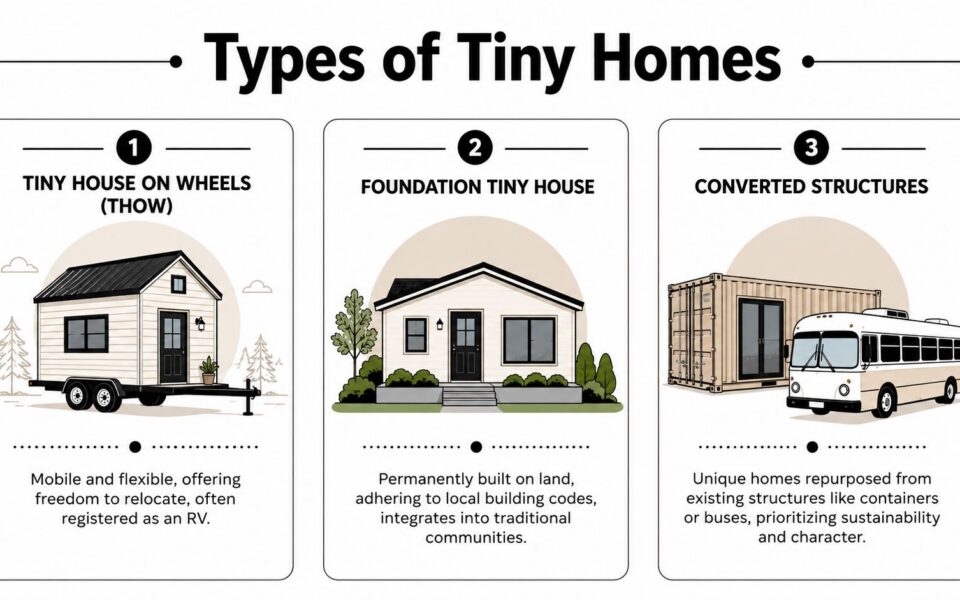
There are two main types of tiny houses: movable homes (also known as tiny houses on wheels, or THOWs) and tiny homes on a permanent foundation. Moveable homes may be designated as recreational vehicles or permanent dwellings, which affects how they are titled and taxed. Some tiny homes on foundations may be designated as accessory dwelling units (ADUs)—smaller, independent residential dwellings located on the same lot as a single-family home [1].
How Much Does a Tiny House Cost?
Research on tiny house villages for the homeless found average unit costs and sizes, though specific pricing for individual purchases varies widely. Financial motivations are often cited as primary reasons for choosing tiny houses, with home ownership through traditional 30-year mortgages being less feasible for many households given the gap between median home prices and median household income. [4][5]
Additional Costs to Budget For
Beyond the purchase price, several additional costs arise. Evidence from multiple sources points to these key considerations:
- Land or lot rental: You will need somewhere to place your tiny house, whether you buy land, rent a spot, or park on someone else's property.
- Utility connections: Water, sewer, and electricity hookups can add significant expense.
- Transportation: Moving a mobile tiny house requires appropriate equipment and professional assistance.
- Permits and fees: Local jurisdictions may require permits and charge fees.
- Site preparation: Foundation work, utility connections, and delivery logistics must be arranged [1].
Zoning, Building Codes, and Legal Considerations
Where Can You Legally Park a Tiny House?
Zoning laws are one of the biggest hurdles for tiny house buyers. Local regulations determine whether you can build and live in a tiny house. If you are considering purchasing a new tiny house, you must check with the building department where you wish to build or place the house to see what is required for their permit. If you are buying an already completed or used tiny house, you will need to contact the local building department to see if they will permit or accept your building for use in their area [1].
Not every location is tiny house-friendly, and rules can vary significantly between different regions. Before purchasing a tiny home on wheels, it is important to research local zoning laws to ensure you can legally park your THOW. Rural areas are often more accommodating to tiny houses on wheels. [1][3]
When speaking to officials, be specific about your structure to get the clearest guidance [1].
State-by-State Considerations
Evidence from multiple sources indicates that the legal landscape remains highly local. Communities are altering land use policy to accommodate tiny and small houses, with case study locations such as Asheville, North Carolina, and Horry County, South Carolina, pioneering land use policy changes in the southeastern United States [3].
Research on tiny house villages for the homeless found greater efforts to develop such villages on the West Coast than elsewhere in the United States, though why this is the case remains to be examined [4].
Building Codes and Safety Standards
Tiny homes are subject to building codes. For tiny houses built in a factory or elsewhere and then moved to where you will use them, an L&I insignia is required. This insignia is only placed on tiny houses that are built to plans approved by L&I and inspected during the construction process [1].
Always inquire about a builder's certifications, as this is a key indicator of their commitment to quality and compliance [1].
Titling and Registration
A buyer must know about the title aspects of tiny home buying and must find out about local and state registration, permitting, and fees. Moveable homes may be designated as recreational vehicles or permanent dwellings, which affects how they are titled and taxed [1].
Where to Buy a Tiny House
Your search for the perfect tiny house can lead you to several sources:
- Reputable Builders: The safest route. Look for builders with strong reviews, transparent pricing, and quality certifications.
- Online Marketplaces: Specialized websites list new and used tiny homes from builders and private sellers.
- Real Estate Listings: Tiny homes on permanent foundations, especially those permitted as ADUs, may appear on standard real estate listings.
Financing Considerations
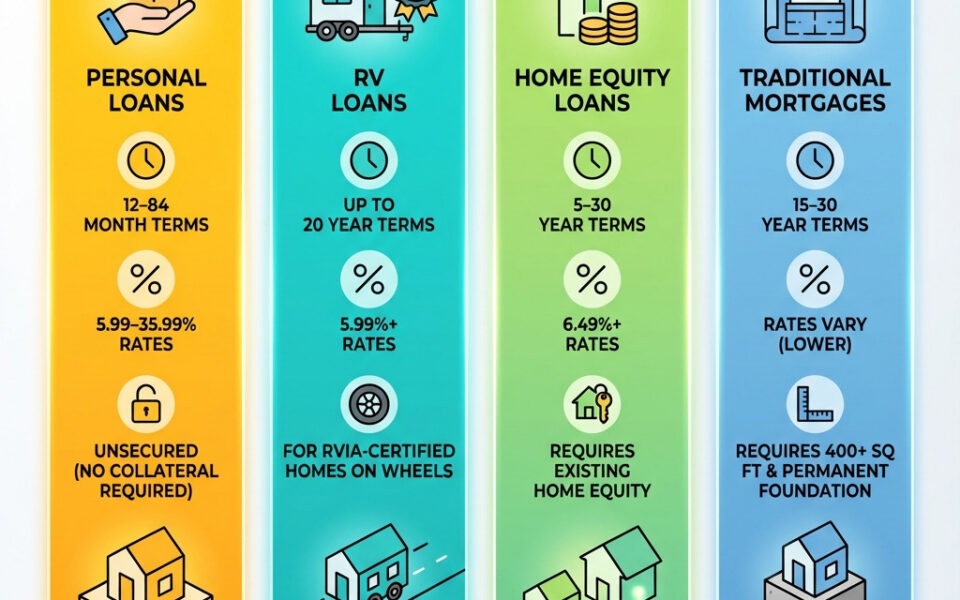
Securing financing for a tiny house can be challenging. Options to explore include personal loans, RV loans for certified THOWs, or builder financing programs [1].
Sustainability and Community Considerations
Research on tiny houses indicates they have potential to address equity issues such as gentrification by providing living spaces to low-income residents in desirable housing locations. Tiny houses de-emphasize mass consumption and excessive belongings. The tiny house movement offers an opportunity to both address the challenges of affordable housing and contribute to residential building decarbonization [2].
Tiny house villages are increasingly appearing as a method of addressing homelessness across the United States. Research has identified 115 tiny house villages for the homeless in the United States as of July 2019 that are either currently operational, slated to open in the future, where efforts have been abandoned, or where the status of the village is unknown. Common physical characteristics among villages include physically gated access (72 percent), while the use of tiny house units on wheels in villages is more uncommon (10 percent) [4].
Final Checklist Before You Buy
Based on evidence from multiple sources, here are key steps to take before purchasing a tiny house:
1. Research local zoning and building codes before purchasing land or a house. 2. Define your type – Choose between THOWs, permanent foundation homes, park models, or shipping container conversions. 3. Budget realistically – Include the home, land, permits, utility hookups, and transport costs. 4. Secure financing – Explore personal loans, RV loans, or builder financing programs. 5. Verify manufacturer credentials – Ask for code compliance documentation and certifications. 6. Prepare your site – Arrange foundation work, utility connections, and delivery logistics. 7. Consult with local planning and zoning departments before making final decisions [1].
Researching local regulations before choosing a home is the best way to avoid delays and unexpected costs. If the new tiny house is being built in a factory or somewhere else and then moved to where you will use it, an L&I insignia is required [1]. With an open mind and open eyes, a buyer can delight in the little things and take pride in the commitment to a minimalist lifestyle.
—
Sources
[1] Washington State Department of Labor & Industries – Tiny Houses: https://lni.wa.gov/licensing-permits/manufactured-modular-mobile-structures/tiny-homes
[2] Siegner, A.B., Webster, B., Bolliger, I., & Kammen, D.M. – Energy and Water Performance of an Off-Grid Tiny House in California: https://rael.berkeley.edu/wp-content/uploads/2022/01/Siegner-Webster-Bolliger-Kammen-TinyHouse-2022.pdf
[3] Clemson University – Integrating Tiny Houses into the American Urban Fabric: https://open.clemson.edu/all_dissertations/1894
[4] Evans, K. – Tackling Homelessness with Tiny Houses: An Inventory of Tiny House Villages in the United States: https://bearworks.missouristate.edu/cgi/viewcontent.cgi?article=2584&context=articles-cnas
[5] Texas A&M University – Ideology V. Reality: The Tiny House Movement in America: https://lair.etamu.edu/cgi/viewcontent.cgi?article=1120&context=honorstheses